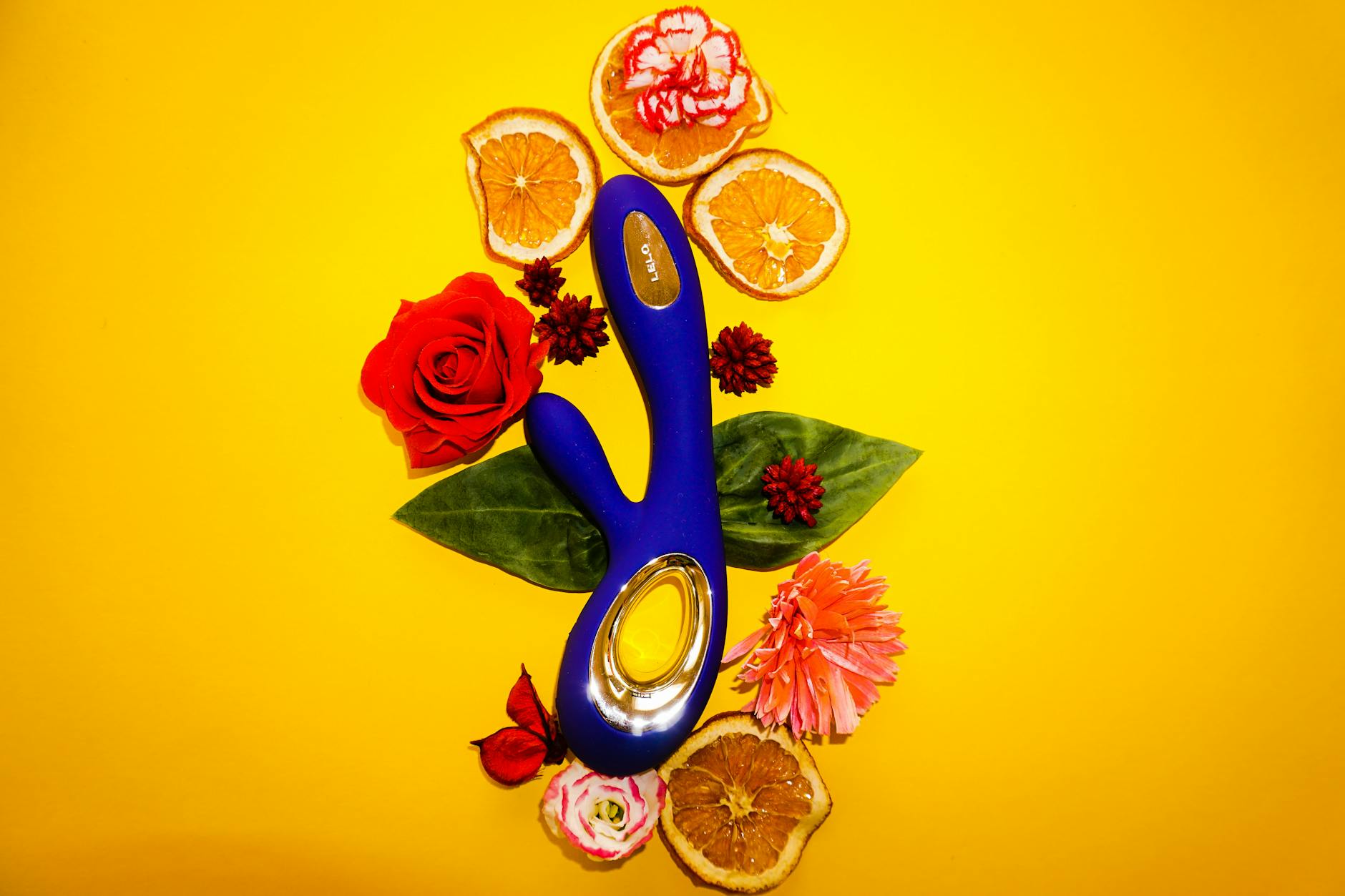
How to Use a Lemon Vibrator When Starting Solo Exploration After Long-Term Partnered Relationships
Years of partnered sex rewire how your body expects touch. A lemon clitoral vibrator bridges that gap, helping you rediscover what feels good on your own terms.
You've spent years, maybe decades, having sex within the framework of a relationship. Your body learned rhythms based on a partner's touch, their preferences, their timing. Now you're exploring solo, and it feels weirdly foreign. That's not a personal failure. That's neurology.
When you transition to solo play after a long-term partnership, your nervous system is genuinely confused. The triggers that used to spark arousal (a partner's presence, their touch, the anticipation of pleasing them) have disappeared. Your clitoris hasn't forgotten how to feel good. Your brain, though, needs recalibration.
Here's what actually helps with that recalibration: a tool that feels completely different from partnered touch. A lemon clitoral vibrator does exactly that.
When you're in a long-term relationship, sex becomes a duet. Your arousal rises and falls based partly on your own desire and partly on your partner's presence, their rhythm, their feedback. Over years, your body starts to expect that external cue. Arousal without a partner present can feel hollow or incomplete, even if you intellectually want it.
Add in the fact that many long-term partnerships involve a specific style of foreplay or touch. If your partner favored deep, sustained pressure, your clitoris got trained to expect that. If they were quick and stimulating, you adapted to that rhythm. After the relationship ends, your body is basically asking: where's the rest of the dance?
A vibrator, especially a suction-style lemon vibrator, introduces something entirely new. It's not replicating partnered touch. It's not trying to fill that gap. It's creating a completely different sensation that your body hasn't had to process within a relational context. That difference is precisely what makes it effective for this transition.
Here's the thing about solo play after partnership: it can feel selfish, or sad, or like you're trying to fill something that's missing. Those feelings are real, and they're normal. But they also block arousal.
When you use a lemon vibrator for the first time solo, give yourself permission to not make it about rekindling anything or proving you're fine. Make it about curiosity. You're not replacing partnered sex. You're learning something new about your own body.
This mental shift matters biochemically. Arousal requires a certain amount of mental freedom. If you're using the vibrator while also carrying guilt or the weight of loss, your parasympathetic nervous system can't fully activate. A lemon clitoral vibrator, because it's so distinctly different from any touch you've experienced, can actually help interrupt that spiral. The sensation is novel enough to keep your brain from defaulting to the sadness.
Most people who've been in long-term partnerships feel a little awkward with solo play at first. Here's a practical approach that works.
First: don't start with the vibrator at full intensity. Set a realistic expectation that the first session is about getting used to the sensation, not about reaching orgasm. Many people put too much pressure on that outcome and then feel let down when it doesn't happen immediately.
Second: give yourself 20-30 minutes of solo time where you're not trying to accomplish anything specific. Some people find it helpful to read something that appeals to them, or to think through a scenario they find interesting. You're not trying to force arousal. You're creating space for it to show up.
Third: when you do reach for the lemon vibrator, start on the lowest setting. The sensation of suction is genuinely different from vibration, and if you jump straight to pattern 4 on a device you've never tried, you can overwhelm your nervous system. Work up gradually.
Many people find that the unfamiliar sensation of a suction-style lemon clitoral vibrator actually works in your favor here. Because it's not mimicking anything your partner ever did, your brain doesn't get stuck in the comparison loop. It's just: what is this? And that curiosity can open up arousal in ways that a more traditional vibrator might not.
You'll likely notice moments where your body expects something that isn't happening. Your hips might shift into a rhythm you used to share with a partner. You might find yourself holding your breath the way you did during partnered sex. You might even feel a flash of sadness.
That's not a sign to stop. That's your nervous system processing information. When you notice it happening, you have a choice: you can pause and sit with it, or you can gently redirect your attention back to the present sensation.
With a lemon vibrator, redirection is usually easier because the sensation is distinctive. It brings you back into your own body in a way that a hand or a partner's touch wouldn't.
Many people find that after a few sessions of solo play, these moments become less frequent and less intense. Your nervous system gradually learns: this is different. This is mine. This is just about what feels good right now.
If you're new to solo play after a long partnership, consistency matters more than intensity. Once a week, for 20-30 minutes, is more valuable than a sporadic intense session followed by weeks of nothing.
Why? Because your nervous system needs to learn that solo pleasure is a regular, reliable part of your life. Not an emergency measure when you're lonely. Not a way to process grief. Just a normal thing you do.
Using a lemon clitoral vibrator regularly also gives your body a chance to recalibrate what arousal feels like when it's entirely self-directed. After a few weeks, you'll likely notice that the vibrator feels more intuitive. Your body learns what intensity you actually prefer, independent of what a partner used to do.
If you're eventually interested in partnered sex again, solo exploration with a lemon vibrator is actually foundational. You learn what genuinely feels good to you, not what you've learned to tolerate or what you think a partner wants.
When you do partner up again, you'll come to that partnership knowing your own pleasure. You can communicate it more clearly. You're not starting from a place of muscle memory and assumption. That's a vastly more secure foundation for new intimacy.
Many people also find that solo pleasure becomes something they want to keep, even within a partnership. A lemon clitoral vibrator isn't a substitute for partnered sex. It's its own thing. And that distinction matters for long-term relationship health.
If you're feeling significant grief or loneliness when you try to explore solo pleasure, that's worth naming. Grief after a long partnership is real and valid. A vibrator isn't a substitute for processing that.
If the transition to solo play is bringing up big emotions, it might be worth talking to a therapist or counselor who specializes in relationships and life transitions. That's not a sign something's wrong with you. That's wisdom.
Similarly, if you're trying solo play and you're feeling numb or completely disconnected from your body, that's also information worth exploring with professional support. Sometimes after a long partnership ends, the nervous system needs more than a vibrator. It needs time and care.
But for most people, the pathway is simpler: time, permission, curiosity, and a tool like a lemon clitoral vibrator that feels entirely new. Your pleasure doesn't disappear after a relationship ends. It just needs space to find its own shape.
Completely normal. Your nervous system associated arousal with partnership for years. When you're suddenly alone with that arousal, grief can show up. It doesn't mean something's wrong. It means you're processing a real loss. The sadness and the pleasure can coexist. Many people find that after a few sessions, the sadness becomes less prominent as your body learns this is a separate context.
Most people report that the first 4-6 sessions feel awkward or mechanical. By session 8-10, arousal usually starts to flow more naturally. That said, everyone's timeline is different. If it's taking longer, that's not a problem. You're retraining your nervous system. That takes time.
Yes, but with nuance. If you're experiencing generalized numbness after a breakup, a vibrator can help because the sensation is novel and distinct. Your clitoris hasn't lost its capacity to feel. But if the numbness feels tied to depression or trauma, that's worth exploring with a therapist first. A lemon clitoral vibrator is a tool for pleasure exploration, not a treatment for depression.
Let that guilt be there without acting on it. You're not doing anything wrong. Solo pleasure is part of healthy sexuality, regardless of relationship status. If guilt is really persistent, it might be worth exploring where that comes from. Often it's rooted in old beliefs about sexuality that don't actually serve you anymore.
That depends entirely on your own comfort and the person you're dating. Some people prefer to keep solo pleasure private. Others find it helps to be upfront about it. There's no universal rule. What matters is that you're being honest with yourself about what you want and need.
If solo play is replacing all other forms of connection or pleasure, that might be worth examining. But regular solo play isn't excessive. Your body won't wear out from vibration. You won't lose the ability to feel pleasure. These are myths. What matters is that your overall life feels balanced and that you're not using solo play as an escape from something that needs actual attention.
Rediscovering solo pleasure after a long partnership isn't about replacing what you had. It's about learning something new about yourself. A lemon vibrator is simply a tool that makes that learning easier because it introduces sensation your body hasn't had to process within a relational context.
Give yourself permission to be awkward at first. Give yourself time. And know that what you're doing is genuinely valuable work. When you know your own pleasure, independent of a partner, everything else becomes clearer.
If you're ready to explore and you'd like to talk through your specific situation, we're here to help. Reach out anytime.