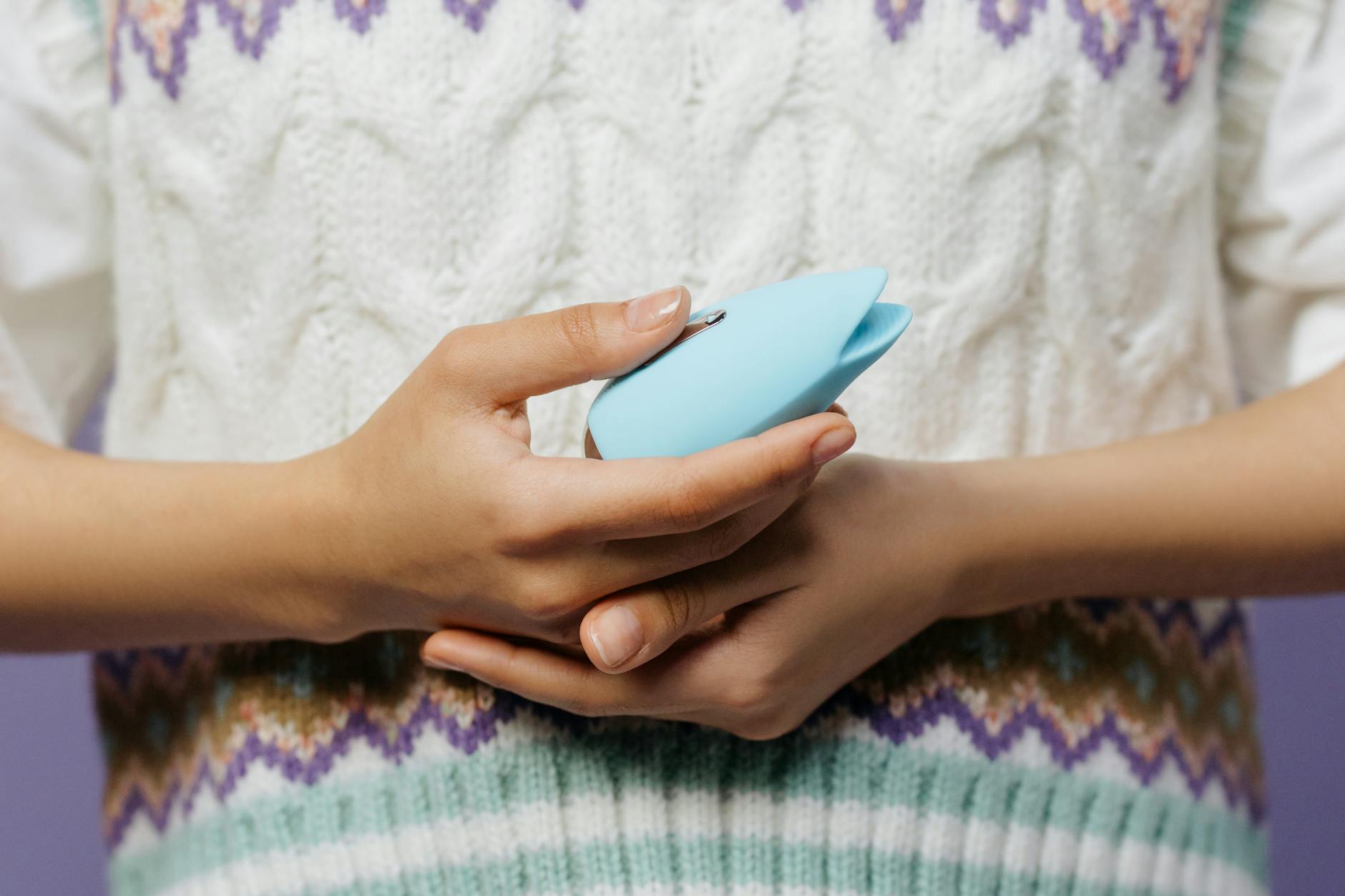
How to Use a Lemon Vibrator When Anxiety Affects Arousal and Pleasure
Anxiety shuts down desire before it even starts. Here's the neuroscience of why, and exactly how lemon clitoral vibrators help you bypass the freeze response and reconnect with pleasure.
Anxiety doesn't just live in your head. It lives in your nervous system. And when your nervous system is in threat-detection mode, your body literally cannot become aroused. This isn't laziness or low desire. This is biology.
When you're anxious, your amygdala floods your system with cortisol and adrenaline. Your brain prioritizes survival. Blood flow redirects away from pleasure centers and toward your limbs, so you can fight or flee. Your pelvic floor tenses. Your skin becomes hypersensitive to the wrong kind of touch. Arousal requires the opposite state: parasympathetic activation, relaxation, expansion.
The problem most people face isn't that they don't want pleasure. It's that their nervous system won't allow it.
You've probably heard it: "Just relax." "Stop thinking about it." "Take a breath." These sound good in theory. In practice, they're impossible to do when your nervous system is stuck in overdrive. Telling someone with anxiety to relax is like telling someone underwater to breathe air.
The reason is neurological. Anxiety engages your dorsal vagal complex, which shuts you down, or your sympathetic nervous system, which keeps you hypervigilant. Neither state is compatible with pleasure.
What works is bypassing the thinking brain entirely and creating a new pathway through direct, rhythmic stimulation. This is where lemon vibrators enter.
Lemon vibrators work through something called "sensory-motor coherence." Instead of asking your anxious brain to quiet down, they give your nervous system a different job: processing rhythmic, consistent sensation.
Here's what happens physiologically:
1. The rhythm grounds you in the present. Anxiety lives in "what if." Rhythmic stimulation pulls you into "what is." The steady pulse of a lemon vibrator or any clitoral vibrator becomes an anchor, much like a heartbeat or breathing. Your nervous system recognizes this pattern and relaxes its threat-detection posture.
2. The sensation creates predictability. Anxiety thrives on uncertainty. A lemon sexual toy provides certainty. You know exactly what sensation is coming next. This predictability tells your brain, "You're safe. You can relax."
3. Suction bypasses touch-sensitive anxiety. Many people with anxiety experience touch as overwhelming or threatening, especially on the clitoris. Traditional vibration can feel like too much input. Suction-based stimulation like the Lem vibrator uses gentle air-pulse technology instead. This feels fundamentally different. It's less intrusive, more enveloping. For anxious nervous systems, this distinction is huge.
4. The physical response builds momentum. As arousal begins, your brain receives feedback: "Look, the body is responding. We're okay." This success rewires the anxiety loop gradually. Over time, your nervous system learns that pleasure is safe.
Using a lemon vibrator when anxiety is in the picture requires a specific approach. This isn't about pushing toward orgasm. It's about nervous system retraining.
Step 1: Choose the right environment. Anxiety peaks in uncertain spaces. You need a location where you feel completely protected. Bedroom door locked. Phone on silent. Blankets nearby. This isn't dramatic. This is your nervous system's requirement for parasympathetic activation.
Step 2: Start with body scans, not touch. Before using any adult toy, spend 2-3 minutes noticing where tension lives in your body. Jaw, shoulders, pelvic floor. Don't try to release it. Just notice. This awareness itself is calming.
Step 3: Use the lemon vibrator on low or pattern 1. Start well below where you think you'd want to be. The goal is not intensity. The goal is nervous system training. Low stimulation, consistent rhythm. This is about repetition and safety, not pleasure yet.
Step 4: Focus on breathing, not sensation. As you use the clitoral vibrator, keep 60 percent of your attention on your breath. In through the nose for four counts, out through the mouth for six. This activates your parasympathetic nervous system directly. The vibration becomes secondary.
Step 5: Stop before frustration peaks. With anxiety, you want to finish when you feel good, not when you feel desperate. If you sense frustration building, stop. This isn't failure. This is telling your nervous system, "I'm listening to you. I'm honoring your pace."
Timing matters hugely for anxious nervous systems. Don't use lemon clitoral vibrators when:
You're actively in a stressful situation. If you just had a fight with your partner or a difficult meeting at work, your nervous system isn't ready. Wait 2-3 hours, if you can.
You're performing for someone else. If your partner is watching and you feel observed, your threat-detection system activates. Pleasure requires a feeling of privacy, even if someone is in the room. Talk about this first.
You've been triggered that day. Trauma and anxiety overlap. If something happened that triggered past wounds, this isn't the day. Respect your system's signal.
Do use a lemon vibrator when:
You're alone and have 20-30 minutes. Anxiety requires time. It won't shift in five minutes.
You've already done some grounding work. A walk, a cold shower, a few minutes of intentional breathing. You don't need to be perfectly calm. You just need to be in the right nervous system zone.
You're curious, not desperate. Desperation is a sign your nervous system is still in scarcity mode. Curiosity is a sign it's ready to explore.
Anxiety makes everything physically tighter. Your pelvic floor contracts. Your tissues become less pliable. This means friction becomes painful rather than pleasurable.
Use a high-quality water-based lubricant. Generously. This isn't optional. Smooth glide gives your nervous system permission to relax. Friction keeps it braced.
For lemon sexual toys or any clitoral vibrator, lubrication also means you can use lower intensity settings and still feel sensation. This circles back to nervous system retraining. You're teaching your body that pleasure doesn't require force.
Using a lem vibrator or any adult toy is part physical, part psychological. Your nervous system learns through repetition and consistency that pleasure is safe. But this learning happens faster when you explicitly tell yourself permission statements.
While using the vibrator, silently repeat: "My body is safe." "I deserve this." "I can feel good." These aren't affirmations in a vague sense. They're direct instructions to your nervous system. Repetition rewires neural pathways.
If anxiety thoughts bubble up, don't fight them. Notice them. Let them pass. The goal is not to have a blank mind. The goal is to stay present with rhythm and breath.
If you have a partner, they need to understand what's happening. Explain: "My nervous system gets stuck. I'm using this tool to help retrain it. This isn't about you or our relationship. It's about me learning that I'm safe."
Some partners want to be involved. Some don't. Both are fine. If your partner wants to be in the room, you can ask them to be present but not to watch. They could read, sit nearby, or simply be there. This creates safety without pressure.
If you eventually want to use a lemon vibrator with a partner, start with them outside the room. Get comfortable with the tool alone first. Then invite them in when you're ready.
No. Your nervous system is plastic, which means it changes. This is why the protocol works. Repeated, safe experiences rewire the pathways that anxiety created. It takes time, sometimes weeks or months of consistent practice. But your capacity for pleasure doesn't disappear. It gets buried under threat signals. The vibrator helps you dig it back out.
No. A clitoral vibrator is one tool. If anxiety is pervasive in your life, you likely need more support: therapy, potentially medication, breathwork training. What the lem vibrator does is create a space where your nervous system can practice feeling safe. That practice supports other healing work, but it doesn't replace it.
Numbness is different from low desire. It's a dissociative response, often from more entrenched trauma. If you're numb, don't push harder. Back off. Use lower intensity, longer warm-up time, and consider talking to a therapist who specializes in somatic work. Your body is protecting you. That's valid.
It depends on how long anxiety has been in charge. If it's new, 2-3 weeks of consistent practice can show results. If anxiety has been your baseline for years, expect 2-3 months of patient, steady work. Progress isn't always linear. Some weeks feel better than others. That's normal.
Yes. In fact, many people find that medication creates the stability their nervous system needs to do this retraining work. Medication quiets the alarm bells enough that you can hear subtler signals from your body. Talk to your doctor, but this combination often works well together.
That's a couples issue that might benefit from a therapist or sex educator. If your partner wants to use a clitoral vibrator or any adult toy to address their anxiety, be supportive. Don't push. Let them explore at their own pace. If anxiety is creating distance between you, professional guidance can help you both navigate it as a team.
Using a lemon vibrator when anxiety is in the picture isn't about forcing pleasure. It's about re-establishing a conversation between your brain and your body. It's about training your nervous system to recognize that pleasure is safe.
This happens in small increments. A moment where you feel your pelvic floor relax. A sensation that surprises you. A breath where you're completely present. These moments build. They accumulate. Over time, your nervous system remembers what safety feels like. And when your nervous system feels safe, pleasure becomes possible again.
If anxiety has been stealing your pleasure, you're not broken. Your system is doing exactly what it was designed to do: protect you. The work is gentleness. Consistency. Permission. And sometimes, the right tool, used with patience, to help your nervous system remember that you're allowed to feel good.
Ready to start? Begin alone. Begin gently. Begin with curiosity. That's all your nervous system needs to begin learning again.