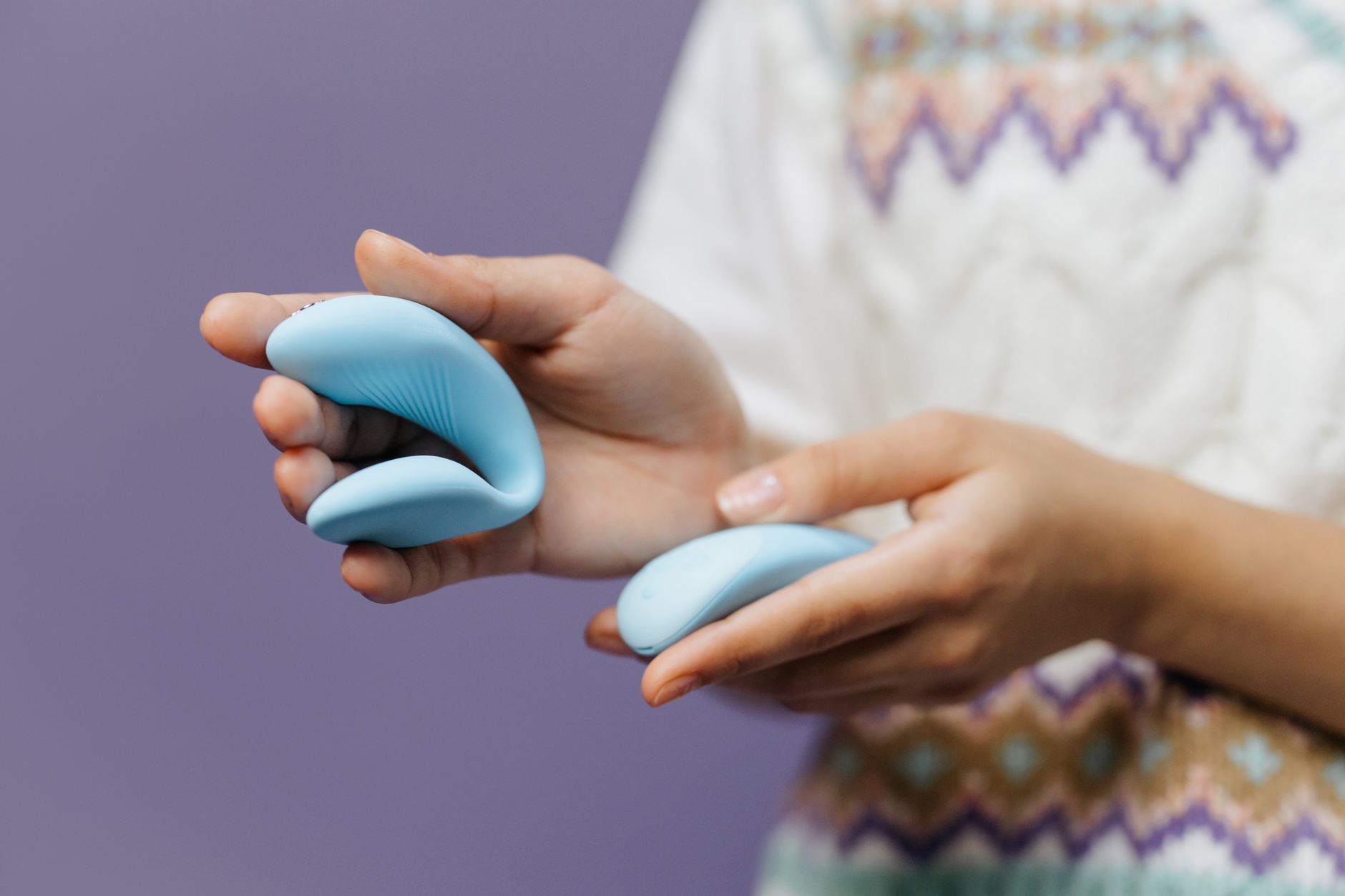
How to Use a Lemon Vibrator When Clitoral Numbness Follows Childbirth
Postpartum numbness is real, temporary, and completely treatable. Here's the clinical picture, plus a step-by-step approach to safely reconnect with sensation.
You've heard about postpartum bleeding, sleep deprivation, and hormonal crashes. Nobody tells you that your clitoris might feel numb. Not pain. Not sensitivity. Just... absent. Like someone turned down the volume on a part of yourself you've relied on for years.
Three things collide during labor and delivery that directly affect clitoral sensation.
First, the pudendal nerve gets compressed. This nerve runs directly through the perineum and supplies sensation to the clitoris, vulva, and pelvic floor. Sustained pressure during labor, especially long pushing phases, can temporarily interrupt its signaling. The sensation doesn't vanish permanently. It's more like static on a radio. The signal is fighting to get through.
Second, inflammation. Tearing, episiotomy, or even swelling from prolonged labor creates localized inflammation that dampens nerve sensitivity. Swelling is your body's healing response, but while it's happening, it acts like insulation around those nerves.
Third, hormonal free fall. Immediately after birth, estrogen and progesterone drop sharply. Estrogen directly affects nerve sensitivity and blood flow to genital tissue. Lower estrogen means slower nerve conduction and reduced blood perfusion, both of which contribute to that flattened sensation.
For most people, this resolves between 3 to 12 months postpartum. For some, it takes longer. Timeline varies wildly based on how much trauma occurred during birth, how your body heals, and whether you're breastfeeding (which suppresses estrogen further).
Here's why air-suction devices like the Lemon vibrator are particularly useful during this phase: they work by stimulating nerve bundles, not by relying on direct pressure or friction.
When clitoral tissue is inflamed or sensation is dampened, intense vibration can feel overwhelming or even painful. Suction works differently. It creates a gentle seal and rhythmic pressure that stimulates nerves without the mechanical abrasiveness of a traditional vibrator. Think of it as coaxing your nervous system back online rather than shocking it awake.
The gentlest setting on a lemon vibrator is genuinely gentle. Settings 1 and 2 deliver about 40 to 60 percent of full intensity, which makes them ideal for retraining sensation without overstimulating healing tissue.
Don't start at 4 weeks. Your body needs a solid foundation first.
Your gynecologist or midwife will typically clear you for intercourse at 6 weeks postpartum, assuming no complications. That's the minimum floor. But "cleared for intercourse" doesn't mean sensation is back or tissue is fully healed. Most people aren't genuinely ready until 8 to 12 weeks.
Honestly? Wait until you have a full night's sleep before you try this. Exhaustion kills sensation almost as much as numbness does. You need your nervous system somewhat rested.
Wait also until perineal pain is gone. Not "manageable," but actually gone. If you're still wincing when you sit, your tissue is still actively inflamed, and a vibrator won't help. It'll just add sensation you can't accurately interpret.
Start with exploration, not pleasure. The goal is nervous system retraining, not orgasm.
Set aside 15 to 20 minutes when you're not interrupted. Turn off your phone. Lie down somewhere comfortable. Use a water-based lubricant generously. Your natural lubrication might not be back yet, and using lube prevents friction without adding pressure.
Start on setting 1. Position the lemon vibrator over the clitoris and hold it there without moving it. Don't chase sensation. Don't try to speed things up. Just hold steady contact for 2 to 3 minutes and notice what you feel. You might feel almost nothing. That's fine. You're teaching your nerves they're safe.
Then pause. Touch yourself with your fingers. Notice the difference between vibration and manual touch. This contrast helps your nervous system recalibrate.
Repeat this sequence twice a week, not daily. Recovery requires rest. Too frequent stimulation can desensitize you further.
After 2 to 3 weeks of this foundation work, try slow side-to-side motion with the lemon vibrator on setting 1. Very slow. Like 2 inches per second. Again, 2 to 3 minutes, then pause and touch.
Once sensation begins to return, you'll notice it. The numbness doesn't disappear all at once. It gradually shifts into tingling, then into actual feeling. You might feel a slight buzzing before you feel pleasure. That's exactly right.
If you feel pain instead of numbness, stop immediately. Pain signals either active inflammation, an episiotomy that hasn't fully closed, or infection. Schedule a postpartum checkup before trying again.
If sensation returns unevenly (one side numb, one side awake), that's normal. Nerve pathways don't wake up in sync. Give it time. Some asymmetry corrects itself over weeks.
If you feel sensation returning in your thighs or labia but the clitoris stays numb, you're not broken. The pudendal nerve branches out. You're seeing other branches wake up first. The clitoris is at the nerve's terminal end, so it's often the last to recover fully.
If you feel overwhelmingly emotional during recovery sessions, that's also completely normal. You're reconnecting with a part of yourself you couldn't feel. That can bring up grief, relief, or confusion all at once. Let yourself feel it.
If you have a partner, this is a conversation before anything physical.
Your partner needs to understand that numbness isn't a reflection on them or your attraction. It's purely neurological. You're not withholding pleasure or disconnecting emotionally. Your clitoris is temporarily offline. That's a different thing entirely.
When you're ready to include your partner, they can use their fingers or hands while you use the lemon vibrator. The layering of sensations helps your nervous system reconnect faster than either stimulus alone. But make clear that the goal is sensation awareness, not orgasm. Remove the pressure to perform or reach climax. That pressure actually delays recovery.
If penetrative sex is part of your relationship, wait until sensation is genuinely returning. Starting too early muddles the signals your nervous system is trying to send. You want clarity, not confusion.
If you're taking pain medication for perineal pain, that's fine. Finish the course if needed.
Breastfeeding directly slows sensation recovery because it suppresses estrogen. If you're nursing, expect a longer timeline. This isn't a reason to stop breastfeeding. It's just a realistic expectation. Recovery might take 6 to 18 months instead of 3 to 12 months. That's still within normal range.
Hormonal birth control (the pill, patch, or ring) can also slow recovery because it suppresses natural estrogen. If you've switched to hormonal contraception postpartum and sensation isn't returning, that might be part of it. Talk to your doctor about whether a different method is worth trying.
If numbness persists beyond 18 months postpartum, ask your gynecologist about pelvic floor physical therapy. A specialist can assess whether the pudendal nerve has actually recovered or whether there's compression still happening. Physical therapy, biofeedback, and sometimes topical nerve healing treatments can accelerate recovery in stubborn cases.
If pain appears instead of numbness at any point, see a provider. That's not normal postpartum sensation and needs clinical assessment.
Your pleasure didn't disappear. It's resting. Most people find sensation returning steadily between months 3 and 9 postpartum. By month 12, most people report sensation is back to baseline or better.
Better because many people emerge from this recovery with greater awareness of what they actually enjoy. When you rebuild sensation intentionally, you don't just recover. You often deepen.
Yes, absolutely. C-section births avoid perineal trauma, so your recovery timeline is typically faster. You might feel sensation returning closer to 8 to 10 weeks postpartum instead of 12 to 16 weeks. The same gentle protocol applies. Start at 6 to 8 weeks postpartum, wait until perineal pain (or incision pain, in your case) is fully gone, and use setting 1 first. Your timeline is usually shorter, so you'll progress faster through the gentle stages into normal use.
Often yes. Many people report sensation returns to baseline or feels even more responsive because you've trained your nervous system with intention. You've essentially recalibrated. For some people, sensation takes longer to return or doesn't fully match pre-pregnancy baseline, but it still becomes rich and responsive. The variation depends on how much trauma occurred during birth and your individual healing capacity. Patience matters more than a specific outcome.
No. Pain signals tissue that's not ready or not healed. Stop using the vibrator and schedule a postpartum checkup. Pain might indicate infection, an episiotomy that reopened, or excessive inflammation. Once that's cleared, you can restart the protocol. Don't push through pain hoping sensation will return. That approach backfires and can actually delay healing.
Wait until you've completed at least 2 to 3 weeks of solo sensation work first. This gives your nervous system a private space to recalibrate without the complexity of a partner's presence or expectations. Once you're seeing sensation return on your own, layering in a partner's touch becomes a tool for recovery, not a complication. Most people are ready around 12 to 16 weeks postpartum, depending on birth trauma and healing speed.
No. Numbing cream will actually delay recovery because it silences the very signals you're trying to help your nervous system relearn. Topical estrogen cream might help in some cases, but that's a conversation with your gynecologist, not a DIY solution. The best tool is time plus gentle, consistent stimulation. Your nervous system knows how to heal. It just needs consistent low-pressure signals telling it that sensation is safe.
Asymmetrical recovery is completely normal. The pudendal nerve branches, and different branches can wake up on different timelines. Continue the protocol on both sides equally. Don't focus only on the numb side. The stimulation will eventually even out. Most asymmetry resolves within a few weeks of continued gentle use. If asymmetry persists beyond 12 weeks, mention it to your doctor so they can check for nerve compression.
Your clitoris isn't broken. It's healing. A lemon vibrator isn't a fix for postpartum numbness. It's a tool for helping your nervous system remember how to feel. The actual healing happens in your body's own timeline, supported by patience, gentleness, and realistic expectations.
If you need to talk through the emotional side of this recovery or how it's affecting your relationship, reach out to a therapist or counselor. Your physical recovery matters. So does the mental and relational piece.