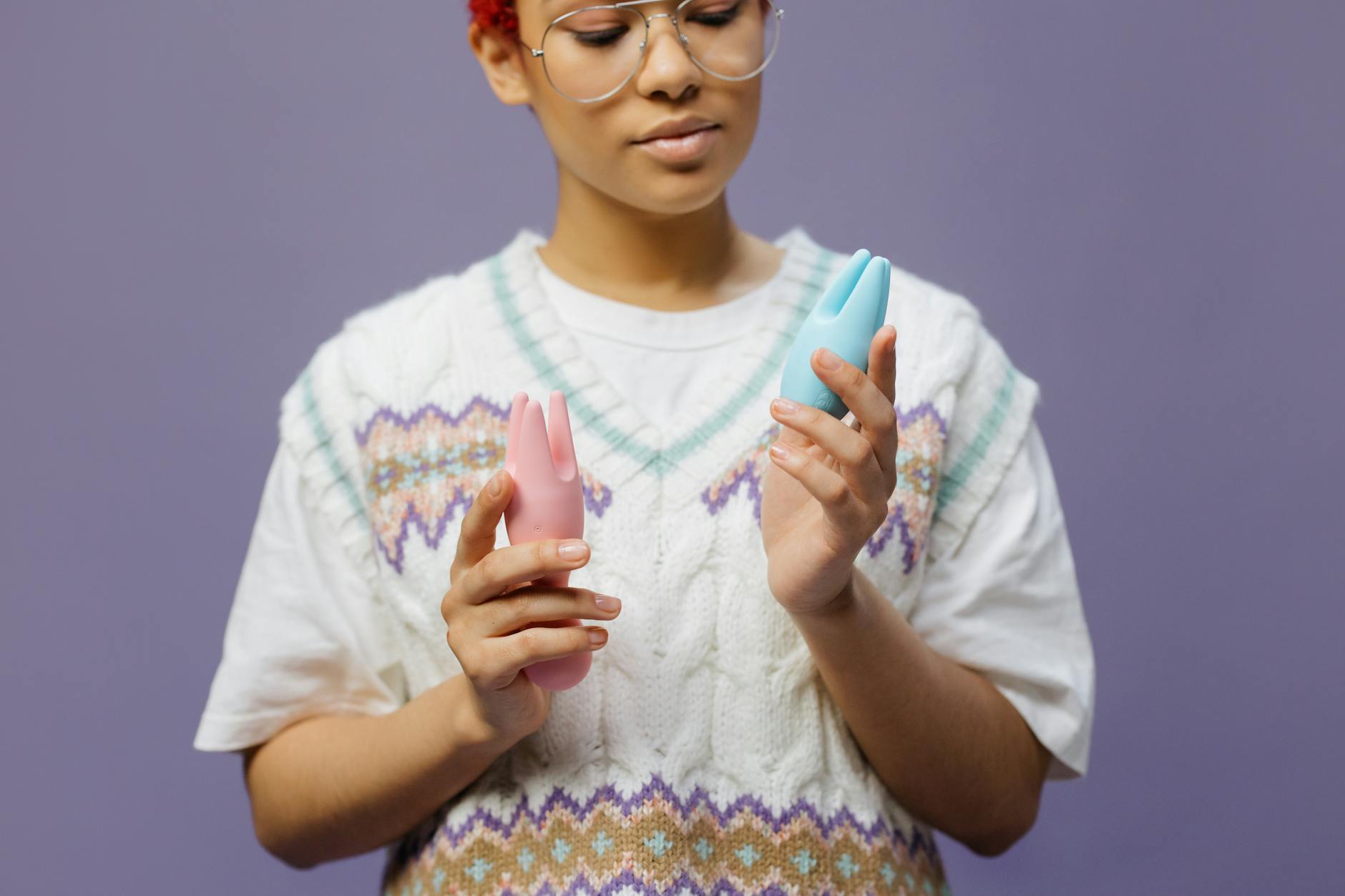
Your partner wanting to watch you use your lemon vibrator is not the same as inviting them into solo play. One is voyeurism. The other is performance. The difference matters enormously, and getting it right transforms the experience from awkward to genuinely intimate.
Most people skip the distinction entirely. They either shut down the request because it feels exposing, or they agree and spend the whole time worried they're doing it wrong. Both miss what's actually available here.
When a partner asks to watch, they're usually not asking you to perform for them like you're an actor in their fantasy. What they're actually asking is to be let into something you've kept private. They want to see you in a moment of genuine pleasure, which means seeing you let your guard down completely.
That's vulnerable territory. You don't owe anyone that access, ever. But if you choose to offer it, something shifts in a relationship. There's a kind of trust that builds when someone watches you pursue your own pleasure without needing to center them, direct them, or make them comfortable.
The trick is keeping that balance. You're not performing. You're not accommodating. You're letting them observe something real while you stay anchored in what actually feels good.
This is non-negotiable. You need to know what they actually want before clothes come off. Ask directly: Are they interested in touching themselves while they watch? Are they planning to touch you? Do they want to talk, or stay silent? Can they take photos or video? When does watching stop and participation begin?
Most partners haven't thought through these specifics. They'll say "I just want to watch you come," which sounds simple but is actually vague. Vague requests create anxiety, and anxiety kills arousal.
Here's what I typically recommend: start with agreed silence and agreed non-touch. No phones. They sit or lie nearby, fully present, but they don't join in. This boundary keeps your pleasure the main event. If it feels good and you both want more, you can renegotiate next time. But starting with clear limits means you can actually relax into it.
A clitoral vibrator like the Lem works differently than other toys in partner scenarios. It's precise, fast, and takes you to orgasm efficiently. This means the whole experience stays anchored in your body, your pleasure, your timeline. There's no complicated choreography to manage while someone's watching.
That directness is your friend here. You're not trying to make it "sexy" or extended or performative. You warm up, you use the vibrator, you come. The simplicity means your partner gets to watch something genuinely intimate without you having to twist yourself into an unfamiliar shape.
Three things change when someone's watching. Your body knows it's not alone, which can make arousal harder. Your brain might loop on "am I doing this right," which is the opposite of what you need. And the temperature in the room feels different.
Compensate for this by building in more warm-up time than you normally need. Alone, you might need five minutes. With a partner watching, budget fifteen. Use your hands first. Build to the vibrator slowly. This isn't teasing them. It's giving your nervous system time to settle into being seen.
Start at a lower intensity setting on the Lem than you would alone. You're not trying to prove anything. You're trying to feel good, which is harder when you're being observed. Let intensity build gradually as your body acclimates to being watched.
Sometimes you can't come when someone's watching. Sometimes you can come, but it feels thin or disconnected from what you wanted. Sometimes you get halfway there and your brain hijacks you into self-consciousness.
All of that is normal. Your nervous system is doing exactly what nervous systems do when they perceive an audience. The first time you try this, give yourself permission to stop, to laugh, to say "this isn't landing for me right now."
If your partner pushes back ("but I want to see you"), that's useful information about your relationship. Not a dealbreaker necessarily, but worth examining. Your pleasure is not a gift you owe them. If you're offering access to something private, they're already getting something special. Expecting you to deliver an orgasm on demand crosses a line.
If it does work, something shifts. You've let someone into a moment where you're completely unguarded. You've shown them what you actually look like when pleasure is the only thing that matters. They've seen you without the usual social choreography we all do in relationships.
That kind of witnessing creates a different register of intimacy. Some couples say it's the most connected they've felt in years. Others realize it's not their thing, and that's equally valid.
The point is to find out from a place of actual choice, not obligation or coercion or fear. You set the terms. You change them if they stop working. You stop entirely if you want to. That's the foundation that makes watching actually intimate instead of just exposing.
Yes. Absolutely. "I'm not feeling this anymore" is a complete sentence. A partner who respects you will understand immediately. If they don't, that tells you something important about whether this experiment should continue.
That's something to negotiate before you start. Some couples enjoy transitioning from watching to partnered play. Others want those to stay separate experiences. Knowing your preference ahead of time keeps things smooth. If they ask mid-session and you want to keep it solo, "not tonight" is enough.
Completely normal. Your nervous system is in a different state. A setting that works beautifully alone might feel too intense or not quite right when you're being observed. Give yourself permission to experiment and adjust. This isn't a test you need to pass.
Yes, if you want to. Some people come quietly. Others vocalize loudly. Some have visible tension, others look almost still. If your partner has an expectation that doesn't match your reality, they might think something's wrong. A quick heads-up ("I'm pretty quiet" or "I tend to tense up") prevents that confusion.
Focus on sensation, not optics. Close your eyes if that helps. Concentrate on what the vibrator feels like, not what you look like. Your partner is watching because they're attracted to you and interested in your pleasure. They're not critically examining your appearance. Your brain wants to make it about that because that feels safer than actually being vulnerable, but it's not what's happening.
I'd recommend getting comfortable with it solo first. You want to know what actually feels good to you before you add the layer of being watched. Once you've used your Lem a few times and understand your preferences, the watching scenario is much easier to navigate.
Using a lemon vibrator when your partner's watching is less about the toy itself and more about the conversation and agreements that come before it. The Lem works beautifully in this scenario because it's designed for solo pleasure, which means it keeps your body and your experience at the center. But that only matters if you're actually willing to keep yourself there instead of contorting into what you think they want to see.
Your pleasure isn't a performance. It's something real that happens inside you. Sharing it means letting someone else close enough to witness that realness, on your terms, in a way that keeps you safe and feeling good. That's the difference between just being watched and actually being seen. And it's worth taking the time to get right.