Stress doesn't just kill the mood. It kills the entire nervous system's ability to recognize that the mood exists. When you're running on cortisol and exhaustion, your brain literally deprioritizes arousal. Your body has bigger survival problems to solve, from its perspective.
What makes this especially frustrating is that the barrier isn't willpower or attraction or anything emotional. It's physiology. Your sympathetic nervous system (the fight-flight side) is cranked up so high that your parasympathetic nervous system (the rest-and-digest side where sex lives) has nowhere to land.
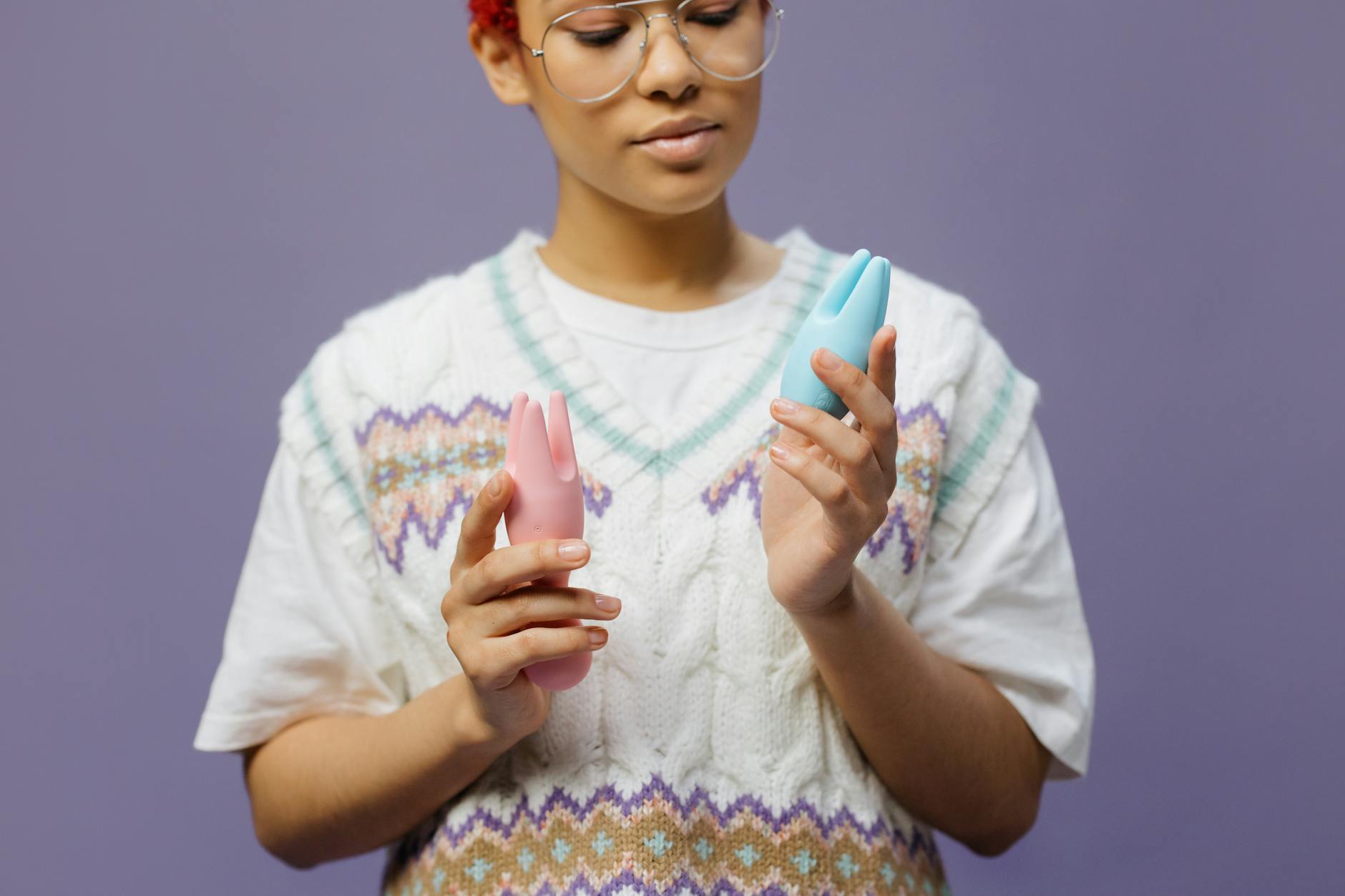
Here's the thing: a lemon vibrator can actually help restart that conversation with your body. Not by forcing anything, but by creating a very specific kind of physical signal that tells your nervous system it's safe to pay attention to pleasure again.
If you've dealt with low libido before, stress-induced numbness feels uniquely frustrating. With hormonal shifts or relationship friction, you usually feel something. You might feel conflicted, tired, or disconnected. But you're still in the game.
Stress-dormant libido? You feel absent. Like you're reading about sex in a Wikipedia article written in a language you used to speak fluently. The mechanics are there. The information is there. The willingness is there. But there's a thick pane of glass between you and any actual sensation.
This often shows up as:
Physical numbness in the genitals even when you're alone
Thoughts about sex that feel completely abstract (no tingling, no body response)
An almost scientific disinterest, like you're reviewing someone else's experience
Irritation at the suggestion of sex, not from anger but from sheer disconnection
That numbness is a stress response, full stop. And it's reversible.
You've probably already tried the obvious: setting aside time, reducing distractions, or just waiting for stress to pass. And nothing happens. Your body stays offline.
The reason a lemon clitoral vibrator helps where these approaches fail is that it creates consistent, external input to the nervous system without requiring you to generate arousal from nothing. You're not trying to think yourself into desire. You're letting physical sensation do the work.
Here's the neurology: clitoral stimulation activates the pudendal nerve, which sends signals to the brain that feel distinctly pleasurable and different from everyday touch. When you're stress-numb, your brain has basically stopped listening to gentle signals. A vibrator is loud enough that it cuts through the static.
But it's not aggressive. That's the key difference. A lemon vibrator's suction-based stimulation is rhythmic and building rather than jolting. It gives your nervous system permission to gradually shift from sympathetic to parasympathetic activation. Your body doesn't feel ambushed. It feels invited.
If you're stress-numb, diving straight into intensity is pointless. Your body won't respond, and you'll just feel more broken. Instead, treat this like a slow reintroduction.
Week one: sensation without pressure.
Don't aim for pleasure yet. The goal is just to wake up nerve endings. Use your lem vibrator (or whatever lemon vibrator you have) on the lowest intensity, in a private space where you genuinely won't be interrupted. Set a timer for five minutes. You're not trying to orgasm. You're not trying to feel anything specific. You're just checking if your body can register that something is happening.
Many people in acute stress find that even registering sensation takes several attempts. That's completely normal. Your nervous system needs permission to pay attention.
Week two: curiosity mode.
Same setup. Still low intensity. But now you're exploring what feels different across the spectrum of the clitoris. Outer edges, center, different pressure angles. You're building a map of what this part of your body can register when stress isn't driving the ship.
By now, you've probably noticed that sensation is coming back. The numbness is lifting. This is where you can slowly increase intensity or try slightly longer sessions. Your body is learning that pleasure is safe to resume.
The entire goal here is to move from "I feel nothing" to "I can feel something, even if it's not yet hot" to "I'm starting to enjoy this."
Here's where I need to be direct: a lemon vibrator can restart your access to pleasure. It cannot fix the actual stressor.
If your libido went dormant because you're working 60-hour weeks, your partner is going through a health crisis, or you're in a grief process, the vibrator is a beautiful tool for reconnecting with your body. But the real work is addressing the stress itself.
Do that in parallel:
Talk to your doctor if stress has been unmanageable for weeks
Consider therapy or coaching if you're in a relationship and stress is affecting both of you
Name the stressor explicitly. "I know why my body shut down. That's actually helpful information."
Set one boundary or delegate one thing this month
Pleasure is not a luxury that only applies when life is calm. But your nervous system does need to believe, eventually, that the threat has passed. A vibrator gives you pleasure. The other stuff gives your body permission to believe it's safe.
First, you'll feel the physical stimulation (we covered that). Then, about a week or two in, you'll notice anticipation. "Oh right, I was going to use that tonight." It's a small signal, but it's your brain starting to associate the vibrator with something that matters.
Then comes the breakthrough moment: you'll feel something close to desire, or at least curiosity, before you even reach for the device. That's your parasympathetic nervous system waking up. That's arousal returning.
From there, the dopamine and pleasure signals usually compound. Your body remembers what pleasure felt like. Stress-numb numbness was scary because it felt permanent. It's not. It's just a pause.
If you're using a lemon clitoral vibrator to restart libido after stress, weave it into a few other practices that signal safety to your nervous system.
Sleep first. Stress-numb libido almost always pairs with poor sleep. Your body can't imagine caring about pleasure if it's running on two hours and anxiety. Prioritize sleep, even just for two weeks. You'll be amazed how much this shifts.
Move your body. Exercise is a stress reset button. It doesn't need to be intense. A 20-minute walk or some gentle stretching tells your nervous system that you have agency and control.
Single-task the vibrator session. Don't scroll your phone while using a lemon vibrator. Don't half-pay-attention. Give it genuine focus. This signals to your brain that pleasure is worth your attention, which is a big deal when stress has been saying the opposite.
Use lubricant even if you don't think you need it. Stress flattens natural lubrication. A water-based lube makes the experience more comfortable and signals that you're taking this seriously. Try caring for your toys properly to keep them in great shape for long-term use.
Anywhere from two weeks to three months, depending on how acute the stress is and whether you're addressing the root cause. The vibrator usually starts showing results within the first week (sensation returning), but the full return of desire and pleasure usually takes longer. Be patient with yourself. Your body is recalibrating.
Completely. Some people feel nothing the first three times. Your nervous system is skeptical. It has been through a lot. Keep showing up, but don't push hard. The whole point is that this is supposed to feel good, not obligatory.
Yes, absolutely. You don't have to wait for stress to be fully resolved. Using a vibrator is actually a form of stress management. It signals your nervous system that pleasure and safety still exist. Just pair it with other stress-reduction tools. A vibrator alone can't carry the weight of chronic stress, but it's part of the recovery toolkit.
That depends on your relationship. If you're partnered, this conversation is often helpful because it explains what's happening with your desire and gives your partner concrete information instead of them wondering what's wrong. You could frame it as "I'm working on reconnecting with my body, and I'm using some tools to help." Whether you share the specific tool is up to you and your comfort level.
That's a sign to talk to a doctor. Prolonged numbness after stress, especially if combined with depression, fatigue, or mood changes, might indicate something beyond the standard stress response. Medical evaluation is worth considering. There's no shame in that. Sometimes the nervous system needs professional support.
A lemon vibrator is specifically good for this because the suction mechanism is gentler and more building than direct vibration. But any tool that creates consistent, pleasant sensation can help. What matters more is consistency and patience with yourself. The specific toy is less important than the signal you're sending your body: "We're starting this again."
Stress doesn't kill your capacity for pleasure. It just tells your nervous system that survival is more important than satisfaction. A lemon vibrator is a physical way of saying "Actually, we're safe. We can feel good now." Your body will eventually believe it. Give it time, consistency, and tools that work. Desire comes back. It always does.
If you're feeling stuck or if stress has been affecting your relationship, consider reaching out. We're here to help.