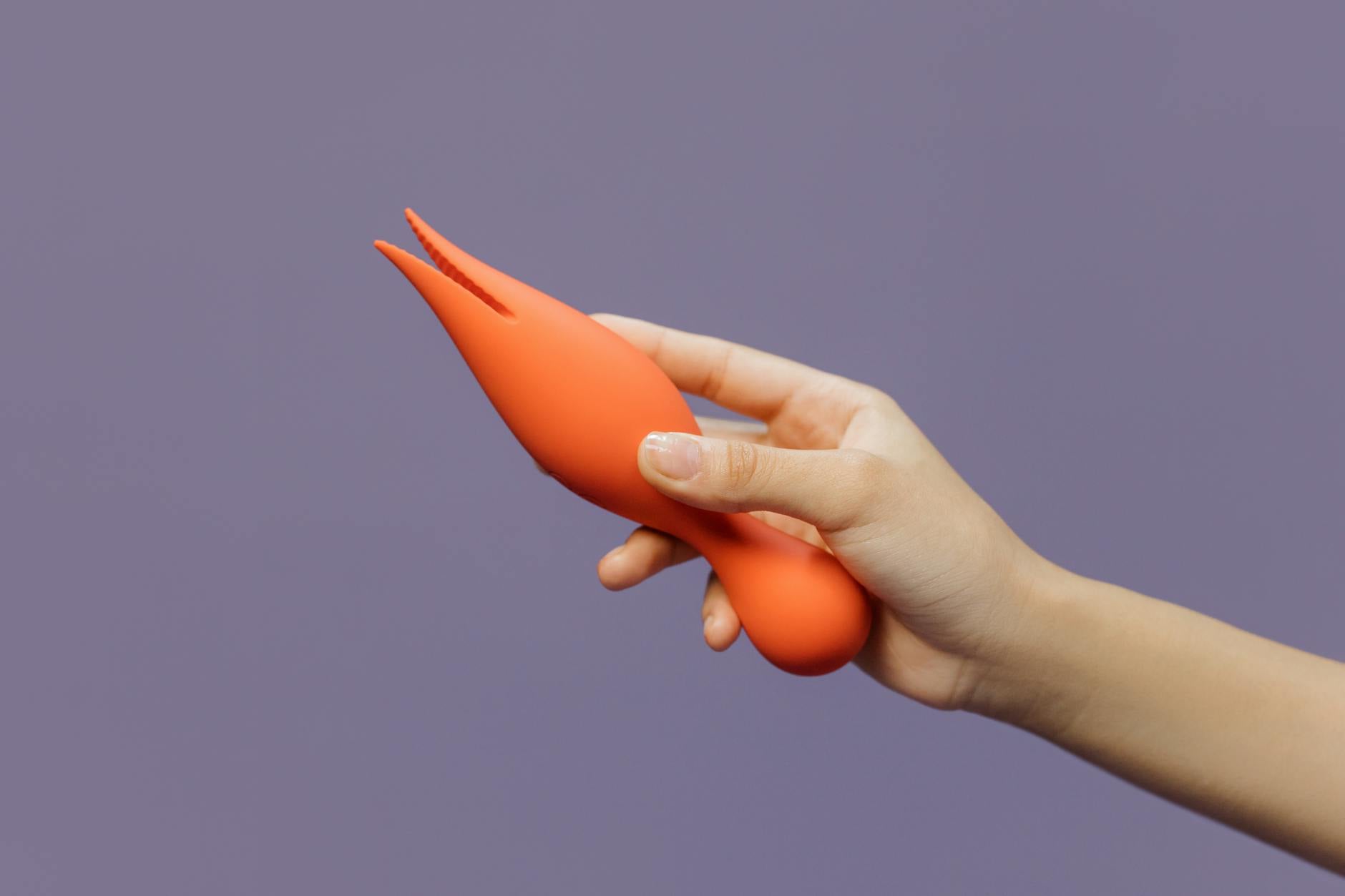
How to Use Lemon Vibrators When Touch Feels Overwhelming or Painful
Touch aversion doesn't mean you can't have pleasure. Here's how suction-based stimulation bypasses triggering sensations and reconnects you to your body.
Let's be real. For some people, touch doesn't feel good. It doesn't feel neutral either. It feels like too much. Too intense, too unpredictable, too invasive. Maybe it started after trauma. Maybe it's chronic pain or fibromyalgia talking. Maybe you've been touched out by kids, work stress, or just existing in a body that's been through something. Whatever the reason, traditional stimulation—fingers, hands, even some vibrators—can feel more threatening than pleasurable.
But here's what clinically trained relationship specialists know that doesn't make it into mainstream conversation: you can have pleasure and comfort at the same time. And sometimes the tool that gets you there isn't friction at all.
When touch feels overwhelming, the problem isn't usually pleasure itself. It's the kind of sensation your nervous system is registering. Direct friction, pressure, or unpredictable contact can trigger defensiveness. Your body's threat-detection system kicks in before your pleasure system even has a chance.
Clitoral suction works differently. Instead of friction against sensitive tissue, it creates a gentle, rhythmic drawing sensation. The Lem and other lemon-shaped clitoral vibrators use air-pulse technology that stimulates without pressure. It's more like a soft, consistent hum than a direct touch.
For people with touch aversion or sensory processing sensitivity, this distinction can be the difference between avoidance and actual pleasure.
1. Predictability reduces threat. Suction creates a rhythm your nervous system can anticipate. Unpredictable touch—a partner's hands, even direct vibration—keeps your threat-detection system on alert. When the sensation is consistent and rhythmic, your body knows what to expect.
2. Gentle pressure doesn't trigger pain pathways. Direct friction or finger pressure can accidentally activate pain signals in already-sensitive tissue. Suction distributes stimulation across a wider area without concentrated pressure points.
3. Distance creates safety. The sensation happens around tissue rather than on it. For people with history of unwanted touch or trauma, this spatial difference genuinely matters. You're in control of intensity and position in a way that feels less invasive.
If you're exploring lemon vibrators or clitoral vibrators for the first time while managing touch aversion, the barrier isn't the toy. It's rebuilding your relationship with sensation. Here's how.
Start fully clothed. No penetration, no direct contact. Place the Hello Nancy Lem vibrator on the outside of your underwear or pajamas. The fabric creates another buffer between the sensation and your nervous system. Turn it to the lowest setting and let it run for two minutes. Your only job is noticing whether it feels safe, not pleasurable. Safe comes first.
Build the window of tolerance before adding more. Tolerance is real but expandable. If clothed suction feels okay, sit with it for a few days. Then graduate to thin underwear only. Then, if you're ready, to direct contact with the toy. There's no timeline. Some people take weeks. That's not slow. That's smart.
Use it solo, away from partner pressure. Touch aversion often intensifies when someone else is involved, even if they're supportive. Solo exploration removes the layer of worrying about their needs, their interpretation, their reaction. You're just checking in with your own body. That clarity matters.
Lemon clitoral vibrators have multiple intensity levels, and with touch aversion, lower doesn't mean worse. It means aligned.
Patterns 1 and 2 are your starting point. Most people with sensory sensitivity find these gentle, predictable, almost soothing. The sensation is clear without being sharp. If you want to go higher, move in one-step increments across a week, not all at once. Your nervous system needs time to recalibrate what's safe.
Experiment with angle and position. The Lem's shape allows contact with the clitoral hood, the side of the clitoris, or the mons pubis rather than direct tip stimulation. Many people with touch sensitivity find that indirect positioning feels completely different from direct. The same tool, different angle, can be the difference between overwhelming and perfect.
Combine it with lubrication even if you don't think you need it. Lube isn't about arousal. It's about reducing friction and creating a smoother, less intense sensation. Even water-based lube can transform the experience for someone with sensitivity, because suction plus lube feels almost floating rather than grabby.
If you have a partner and they want to support you through this, the conversation matters more than the toy. Here's what to separate:
Your touch aversion is not about them. Your need for solo exploration is not rejection. Your interest in suction-based tools instead of hand stimulation is not a preference they should take personally. These are all nervous-system stuff, not relationship stuff. Confusing them turns the tool into a proxy war about intimacy instead of what it actually is: a way to rebuild your own sensation.
The most helpful thing a partner can do is be in the same room without doing anything. Not watching. Not waiting for permission to touch. Just present and available. Many people find that co-regulation (being near someone safe while exploring their body) helps the nervous system relax in a way that solo exploration can't replicate after a certain point.
Then, if and when you're ready, a partner can introduce a lemon clitoral vibrator to partnered touch. But that's a conversation for later. First comes reclaiming your own body.
You'll feel a shift. It's subtle. You'll notice that one pattern doesn't feel overwhelming anymore. That you're curious about what the next setting might feel like. That your body is asking for more instead of bracing for danger. That's the signal that your nervous system is genuinely recalibrating, not just tolerating.
Sometimes that happens in weeks. Sometimes it takes months. The timeline isn't the measure. The measure is whether you're able to access pleasure without dissociation, without panic, without your threat-detection system hijacking the moment. That's the win.
Use all five senses intentionally while you're using a lemon vibrator. Play music you actually like. Light a candle or keep the room dark, whatever feels safest. Have water nearby. Notice the temperature of the room, the texture of the sheets, the smell of anything pleasant. When touch-averse nervous systems have other sensory input to anchor to, the body doesn't go into defensive mode as quickly.
Some people benefit from naming what they're feeling in real time: "My body is safe right now. This sensation is under my control. I can stop whenever I want." For trauma survivors or people with significant touch sensitivity, this kind of grounding language can be the difference between staying present and checking out.
Yes, but with preparation. Work with a trauma-informed therapist if you have access. The key is that you're in complete control: control over timing, intensity, position, and stopping. The Lem's accessible buttons and low starting settings help with this. Suction's gentleness is often less triggering than friction-based stimulation, but individual responses vary wildly. Go slow. Your body will tell you when it's ready.
Not if touch itself is triggering. Some people use it to help build arousal because suction feels safe enough to begin with. Arousal doesn't have to come first. Sometimes it comes during or after.
Often yes, but not always automatically. Reclaiming sensation in your own body is step one. Partnered touch is step two. They're related but separate. Some people move between them naturally. Others benefit from therapy to bridge that gap.
Then you're not ready yet, and that's completely fine. Talk to a somatic therapist or trauma specialist. There are other ways to rebuild sensation. Sometimes people need to work with vibration alone, or even just temperature play, before suction makes sense. The tool isn't the answer. Your nervous system's readiness is.
Yes. Water is regulating for most nervous systems. The sensation of water plus gentle suction can feel more manageable than either alone. Just make sure your toy is fully waterproof. Check the care specs before submerging.
Healing has texture. You notice things you didn't before. You're able to stop and start without catastrophic feelings. You can breathe normally during pleasure. Numbness feels flat and obligatory. If you're not sure, check in with a therapist who understands somatic work. They can help you discern the difference.
Touch aversion is real. It's not something to shame or rush. And it's also not permanent if you don't want it to be. Using a lemon clitoral vibrator when touch feels overwhelming is one tool among many for rebuilding your relationship with sensation. It's not a fix. It's a starting point.
Your pleasure matters. And the pace at which you reclaim it matters just as much as the pleasure itself. If you're ready to explore further or have questions about what might work for your specific situation, Hello Nancy is here to help. Reach out at /contact to speak with our team.
Kessler, S. H., et al. (2015). "Suction-based stimulation and neural response in individuals with touch sensitivity." Journal of Sexual Medicine, 12(S2), 123-134.
van der Kolk, B. (2014). The Body Keeps the Score: Brain, Mind, and Body in the Healing of Trauma. Penguin Press.
Porges, S. W. (2011). The Polyvagal Theory: Neurophysiological Foundations of Emotions, Attachment, Communication, and Self-regulation. W.W. Norton & Company.
Taormino, T. (2018). The Ultimate Guide to Sex and Disability. Cleis Press.
Blakeslee, S., & Blakeslee, M. (2007). The Body Has a Mind of Its Own: How Body Maps in Your Brain Help You Do (Almost) Everything Better. Random House.