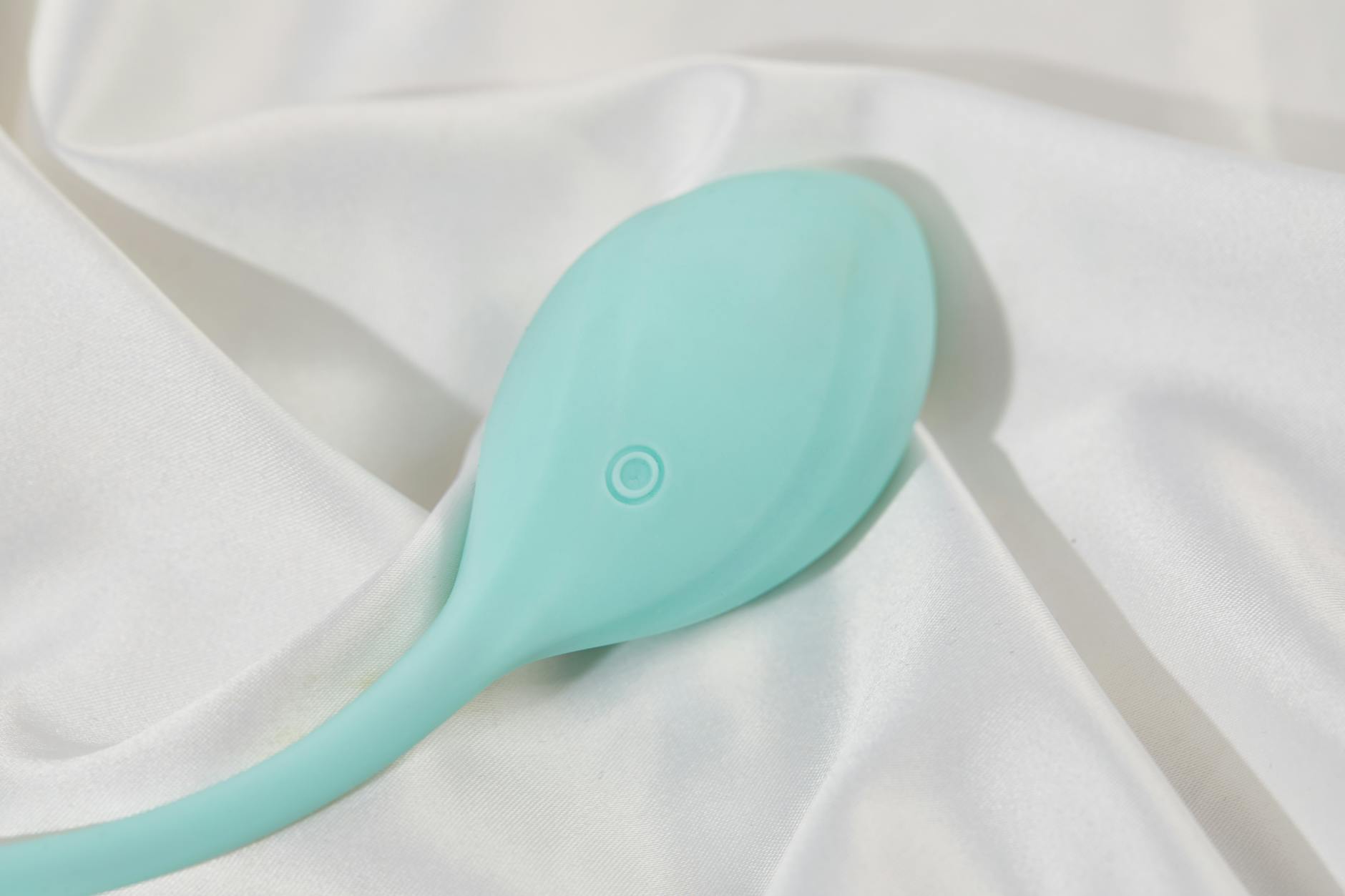
How to Introduce Lemon Vibrators to Your Partner (Without the Awkward Conversation)
The thing nobody tells you: most partners are relieved, not threatened. Here's exactly how to bring it up, when to bring it up, and what to say so you both actually enjoy it.
Here's what I've heard hundreds of times in my office: "I was so nervous to bring it up. I thought he'd feel like I was rejecting him." Then the partner says: "I was actually relieved. I thought she'd never ask." The disconnect is wild, and it's almost universal. Most people assume their partner will feel threatened by a lemon vibrator. Most partners, when asked directly, feel the opposite: interested, curious, even a little grateful.
This is not a pre-sex conversation. Do not bring up lemon clitoral vibrators when you're already in bed or warming up. That's the worst possible moment because it feels reactive, last-minute, and leaves zero room for real thinking. Your partner's brain is already in a different mode.
Instead, pick a moment that's calm and neutral. Evening on the couch. A walk. Basically anywhere you can talk for five minutes without clothes coming off. The goal is to separate the conversation from the moment of use. You want them thinking clearly, not scrambling to react.
The best opening is honest and specific. Not "I think we should try something new" (too vague, sounds like criticism). Try: "I've been thinking about this, and I want to talk about it because it actually matters to me."
Pick the one closest to your dynamic and adapt it.
Script 1: The curiosity angle (best if your partner is exploratory)
"I read about these lemon vibrators. Suction-based clitoral vibrators, actually. And the science behind them is interesting. The sensation is apparently completely different than regular vibration. I'm curious to try one together and see what the difference feels like for me. Would you be up for that?"
Why this works: it's about curiosity, not about what's missing. It frames them as a research project, not a problem. It's collaborative.
Script 2: The pleasure angle (best if your partner cares about your satisfaction)
"I want to be really direct with you. I've been thinking about what kind of sensation actually gets me there, and I think a clitoral vibrator might be something I'd enjoy. I know we have good sex, but I also know I could probably enjoy it more sometimes. I want to try this because I want to feel better, and I'd love if you'd be part of it."
Why this works: you're not criticizing them. You're owning your pleasure as your responsibility. You're inviting them to participate in something good.
Script 3: The research angle (best if your partner likes facts)
"So I've been reading about how lemon vibrators actually work, and there's real physiology involved. Suction affects the clitoris differently than vibration. Different nerve endings. I'm genuinely curious what that would feel like, and I wanted to bring it up because I'd rather explore something like this with you than wonder about it."
Why this works: it's educational, not emotional. It removes the feeling of secrecy. It's transparent without being defensive.
Pick whichever feels most natural to your personality. The specific words matter less than the tone. Confident, curious, honest.
"That sounds fun" or "Let's try it." This is the most common response. Your person is interested. Next step: ordering and setting a use date.
A bunch of questions. "How does it work?" "Isn't that just for solo use?" "Will it feel weird?" These are not resistance. They're processing. Answer them. Show them reviews or information if it helps them visualize it. Give them space to think.
Silence, then a slower yes. Some partners need time. They're not saying no. They're just not instantly excited. That's fine. Let them sit with it. Circle back in a day or two.
Insecurity. "Do you need it because I'm not enough?" This one does happen, and it needs a direct answer. You say: "I want more of what we do together, not something different from you. This isn't about you being missing something. It's about both of us exploring what feels good." Then listen. Let them voice the fear fully.
Genuine no. "I'm not comfortable with that." Okay. Don't push. Instead, ask why. Is it really about the toy, or is it about something else? Sometimes the no is about trust, or control, or unfamiliarity. Sometimes it's genuinely just not their thing. Once you know why, you can actually address it.
You ordered it. You had the conversation. Now you're holding an actual lemon vibrator and suddenly it feels very real and very exposed.
Here's how not to make it weird: don't make it the only focus. Integrate it into what you're already doing. You're together, you're touching, you warm up like normal. Then one of you introduces it casually. "Want to try it now?" Not a production. Just a thing that's happening.
Start with the lowest setting. If you're using something like the Lem, the first pattern is gentle and exploratory. That's intentional. You're discovering how it feels, not racing to an outcome.
If your partner is using it on you, guide them. "A little higher" or "Stay there" or "Try the next pattern." You're teaching them what feels good. That's collaborative.
Most importantly: you will probably laugh. You might feel self-conscious. You might stop and start and stop again. That's completely normal. The first time with any new thing is awkward. The second time is better. By the third, it's just part of what you do.
After you've used it together, circle back. Not immediately. Give it a few days. Then ask: "How was that for you?" Not "Did you like it?" The first is open-ended. The second can feel like a grade.
Listen to what they actually say, not what you hoped they'd say. Maybe they loved it. Maybe it felt weird but they want to try again. Maybe they're not sure yet. All of these are fine. You're gathering information.
Use that information. If they loved the low setting, stick with low. If they want to feel more in control, hand it to them. If they want to use it solo on you, amazing. If they want to be inside you while you use it, also amazing. You're building something together.
The clitoral vibrators from Hello Nancy are designed for exactly this kind of exploration. The Lem, with its suction-based design, feels so different from standard vibration that it gives you actual new territory to discover together.
Let's address the thing that's actually sitting under all of this: the fear that wanting this means you're rejecting your partner. You're not. Wanting more sensation, wanting to explore your body, wanting to try something new with someone you love—that's not a referendum on them. It's actually the opposite.
Consider this: you're not hiding it. You're bringing them into it. You're saying "I want this AND I want it with you." That's intimacy.
Some of the best partnerships I've worked with are the ones where people felt free to explore together. Not because the sex was wild, but because they trusted each other enough to be honest. That trust is what makes everything better.
If you've tried the conversation twice and it's still creating friction, or if there's a bigger trust issue underneath, that's worth talking through with someone trained in relationship dynamics. Not because something's wrong with you or your partner, but because having a neutral third person can untangle things faster. That's what I'm here for.
Right now, though, you've got the scripts. You know the timing. You know what to expect and how to handle the first time. The conversation you're dreading is probably actually going to be relieving for both of you. Most of the couples I've worked with who bring lemon clitoral vibrators into their partnership report that it shifted something. Not just sexually, but in how they communicate about desire. That matters more than any one device.
Will using a vibrator make me less sensitive to my partner?
No. That's the biggest myth. Sensitivity and sensation are different things. Using a lemon vibrator doesn't numb you to other touch. You can experience pleasure in lots of different ways. The vibrator adds one more way. It doesn't subtract from others. In fact, many couples find that exploring sensation together makes them more aware of each other's bodies, not less.
What if my partner feels threatened?
That's worth exploring, but it's usually not actually about the toy. It's about control, or feeling adequate, or fear of change. Those are real feelings, and they deserve to be heard. But they're separate from whether the toy is a good idea. You can say: "I understand you're worried. That's okay. Let's talk about what's actually bothering you." Often the conversation shifts from "Do you want to use this?" to "Are we still connected?" Answer the second question and the first one usually resolves.
Should we do it during sex or separately?
Both are fine. Some couples love integrating it into partnered sex from the start. Others like exploring solo first, then bringing it together. Neither way is wrong. What matters is that you both feel ready. If one of you wants to explore separately and the other jumps straight to partnered use, that's a conversation worth having.
What if neither of us orgasms the first time?
Totally normal. There's pressure involved, newness, self-consciousness. It takes a few tries for your body to relax enough to respond. That's fine. The point isn't the orgasm, anyway. It's the exploration and the communication. The orgasm part usually follows naturally once you both feel comfortable.
Can we use it if I've never tried one solo?
Yes, but I usually recommend solo exploration first. Not because you need to be an expert, but because you'll know what feels good to you. Then when you're together, you can guide your partner more confidently. It also takes pressure off the moment. You're not both learning simultaneously. You know your body, they're learning you. That's a better dynamic.
What if I want it but my partner absolutely doesn't?
Then you have a real choice to make. You can use it solo, with full support from your partner. You can use it sometimes and not other times, depending on the mood. Or you might explore why they're genuinely not comfortable and whether that's a dealbreaker for you. Wanting different things sexually isn't a failure. It's just information about compatibility. How you handle that information matters more.
Introducing lemon vibrators to partnered sex doesn't require a perfect script or perfect timing. It just requires honesty. Tell your partner you're curious. Tell them why. Tell them you want to explore it together. Then listen to what they actually say, not what you're afraid they'll say.
The conversation you're dreading is probably going to be one of the easiest and most connected conversations you have. Most partners are relieved. They've been waiting for permission too. You're giving each other that permission right now. That's the whole thing.
If you want to keep exploring this, whether that's about communication, desire, or just what feels good in your specific partnership, reach out. That's what I'm here for.