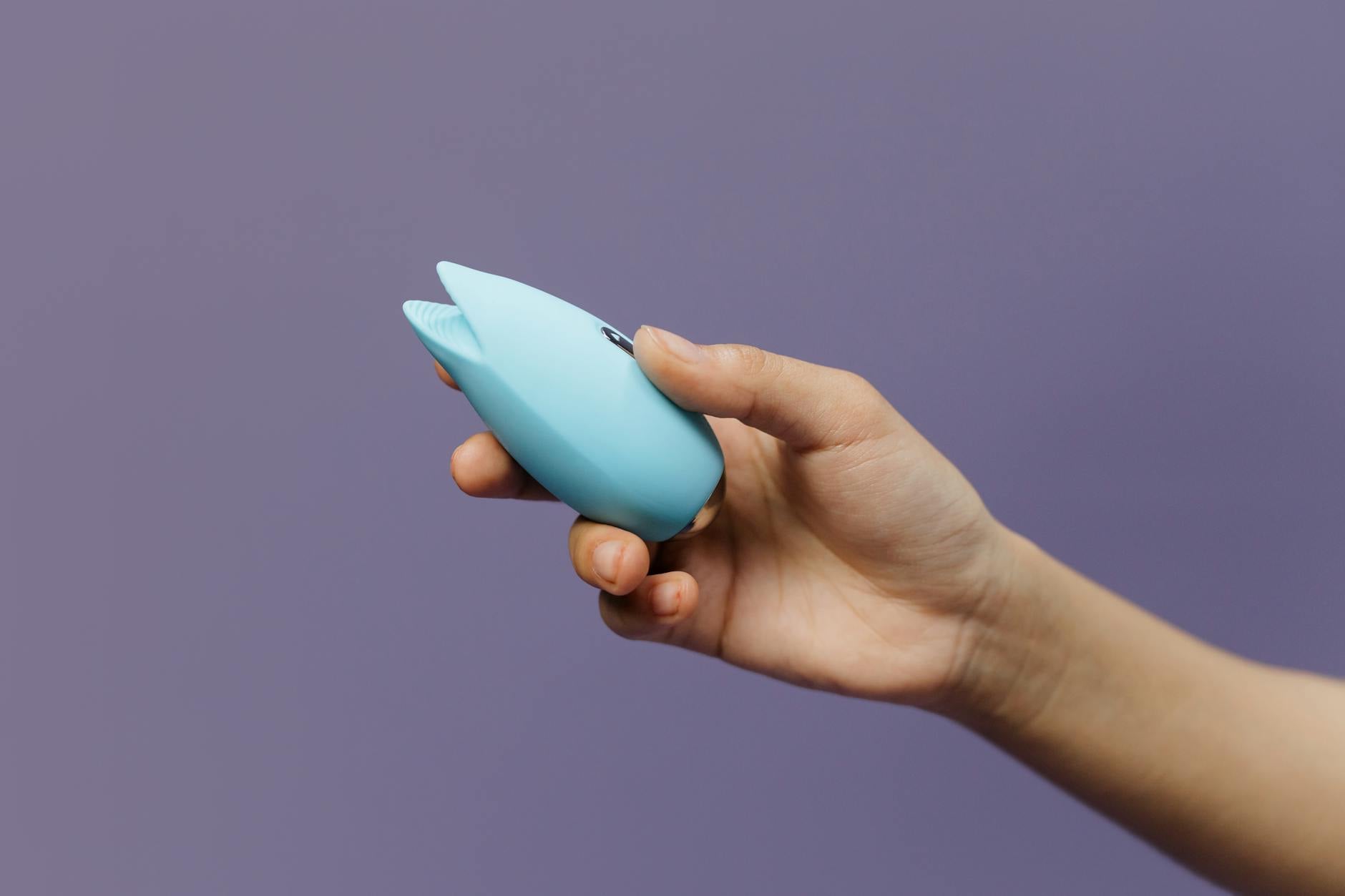
Hormonal shifts don't kill pleasure. They reshape it. Here's what actually changes in your body, why your lemon clitoral vibrator might feel different, and how to make it feel even better.
Let's be real. If you're using a lemon vibrator the same way you did at 25, and it feels different now, you're not imagining it. Your body has changed. But here's what nobody explains clearly: the change isn't decline. It's a shift.
Estrogen and testosterone both drop as you move through midlife. These hormonal changes affect tissue thickness, blood flow, and how quickly your nervous system fires up during arousal. For some people, a clitoral vibrator that once felt perfect now feels too intense. For others, it barely registers at all. Both are normal. Neither means something is broken.
Your vulva is made of erectile tissue, just like a penis. Estrogen keeps that tissue plump, well-vascularized, and responsive. When estrogen drops, the tissue thins slightly. It doesn't disappear. It just behaves differently under stimulation.
The clitoris itself remains largely unchanged. You still have roughly 8,000 nerve endings packed into that small bundle of tissue. The difference is in how quickly blood rushes to it and how the surrounding tissue responds to pressure or suction.
Your pelvic floor muscles also lose some of their automatic tension as estrogen declines. This sounds like bad news, but it's not. A relaxed pelvic floor is actually easier to control consciously. Many people find that learning to engage and release these muscles intentionally creates stronger, more targeted sensations. The lemon vibrator's suction effect becomes more precise when you have better muscle awareness.
Then there's neural plasticity. Your brain's reward circuitry doesn't stop working after 40. It just requires different inputs. What triggered an instant response at 25 might need a longer warm-up now. That's not a bug. That's your nervous system asking for more intentional foreplay.
If you find that your lem vibrator feels less intense than it used to, there are three overlapping reasons.
First: tissue density. Thinner tissue requires gentler initial contact. Jump straight to high intensity and it might feel numb or even uncomfortable. Start lower, build gradually, and you'll often find that sensation deepens as arousal builds and blood flow increases.
Second: expectation sensitivity. Your brain is incredibly powerful. If you approach the lemon vibrator expecting it to feel "different" or "weaker," your nervous system will deliver exactly that. This isn't psychology in the soft sense. It's neurobiology. Expectation literally shapes how your brain processes sensory input. Approaching the device with curiosity instead of comparison changes the entire experience.
Third: lubrication. After 40, natural lubrication can take longer to arrive. Why Lemon Vibrators Feel Better With Lubrication goes deep into this, but the short version is that a slick surface lets the suction cup seal properly and glide smoothly. Without enough natural lubrication, even a clitoral vibrator that felt incredible at 25 can feel sticky or overly intense.
One of the biggest shifts after 40 isn't about sensation itself. It's about arousal trajectory.
At 25, your nervous system could spike into arousal in minutes. Your clitoris would engorge quickly. Vaginal lubrication would arrive on cue. You could grab the lemon vibrator and be off to the races.
After 40, arousal is slower and deeper. This is not worse. It's different, and honestly, it often feels better because you're more present for it.
The arousal window now looks more like this: 15-20 minutes of foreplay with a partner, or 10-15 minutes of solo attention (touching yourself, using your mind, getting your nervous system primed) before introducing a clitoral vibrator. That sounds like a long time if you're comparing to your 25-year-old timeline. But here's the thing: the orgasms that come from that slower buildup are often deeper and more full-bodied than the quick ones used to be.
This is why so many people report that their best orgasms happen after 40. The path there is different. The destination is often richer.
If you're using a lemon vibrator with a partner, you might notice that they have more patience now. The stakes feel lower. There's less pressure to perform on a timeline. Whether you're exploring the lem vibrator solo or with someone else, this psychological shift changes everything.
Solo exploration becomes more important. Learning exactly what your clitoris responds to now. Whether it prefers lighter suction or firmer pressure. Whether you want to use the vibrator for 30 seconds or 30 minutes. When you're with a partner, you're often calibrating around their needs too. Alone, you can follow your own rhythm entirely.
Many people report that solo sessions with their lemon clitoral vibrator become more intentional and more satisfying after 40, not less.
If you're perimenopausal or in early menopause, hormone levels can still fluctuate wildly month to month. One week your clitoris feels supersensitive. The next week you need stronger stimulation. This isn't random. It's your hormones shifting. Why Lemon Vibrators Feel Different During Your Cycle digs into this, but the key insight is that tracking when sensations change can actually help you anticipate and prepare for it.
Keep a simple note: What day of your cycle? How did the vibration feel? Light, medium, intense? What intensity did you use? Over two or three months, a pattern usually emerges. That knowledge is power. You stop wondering if something is wrong with you and start working with your body's actual rhythm.
Your capacity for pleasure doesn't decline. Your clitoral nerve endings don't go anywhere. Your brain's reward circuitry doesn't switch off. The orgasms you're capable of aren't smaller or less intense. They're just accessed differently.
Many of my clients report that orgasms after 40 feel qualitatively different in the best way. Less focused entirely on the genitals, more whole-body, sometimes longer. Some people experience multiple orgasms for the first time. Others find that intensity matters less than duration. The range of sensation available to you doesn't shrink. It recalibrates.
If you're finding that your lemon vibrator, your lem vibrator, or any clitoral vibrator feels different after 40, here's what actually helps.
Lubrication, always. Not because you're broken, but because it transforms sensation. Water-based works best with silicone toys. Silicone-based feels richer but can degrade your vibrator over time.
Lower initial intensity. Start on the gentlest setting. Let arousal build. You can always turn it up. You can't un-turn up intense sensation that feels wrong.
Longer foreplay. Budget 15-25 minutes of attention before you expect the same sensation you got in five minutes at 25. Use your hands, your mind, your partner. Let arousal actually arrive instead of rushing it.
Pelvic floor awareness. Kegels are useful, but so is the opposite: learning to fully relax your pelvic floor. A tight pelvic floor can make suction feel uncomfortable. A relaxed one lets sensation flow through more easily.
Solo exploration. Know your own body now. What matters to you today might be different from what mattered at 25. Permission to explore that without judgment or timeline pressure changes everything.
If pain shows up during use, that's worth flagging. Genitourinary syndrome of menopause (basically, thinner, less elastic tissue) is real and treatable. Often a topical estrogen cream handles it in weeks.
If desire has completely vanished and isn't returning with any kind of stimulation, that's also worth discussing with a menopause-trained provider. Testosterone therapy is available and sometimes genuinely transformative for the right person.
Otherwise, this shift isn't medical. It's biological. It's normal. And for most people, it opens up dimensions of pleasure that were harder to access earlier in life.
Why do lemon vibrators feel less intense after 40?
Three main reasons: tissue becomes slightly thinner with estrogen decline, your nervous system requires a longer arousal window to build full response, and insufficient lubrication can make the sensation feel disconnected or numb. All three are addressable. Lower initial intensity, longer warm-up time, and water-based lubricant usually fix it.
Can you still have strong orgasms with a lemon clitoral vibrator after 40?
Absolutely. Many people report their most intense orgasms happen after 40. The path there is different. The destination is often deeper and more full-bodied. Your capacity for pleasure doesn't decline. It recalibrates.
Does menopause completely kill sensation in the clitoris?
No. Your clitoris still has roughly 8,000 nerve endings. Menopause changes blood flow and how quickly arousal builds, not your fundamental ability to feel pleasure. Why Lemon Vibrators Work Better After 40 explores this in depth, but the short answer is that for many people, sensation actually becomes more nuanced and intentional after hormonal shifts.
Should I use a different type of lemon vibrator after 40?
Not necessarily. The lem vibrator's suction-based stimulation often works beautifully for bodies over 40 because it doesn't rely on intense direct pressure. But your intensity needs, warm-up time, and lubrication habits might shift. The vibrator itself doesn't need to change. Your relationship with it does.
Why does my lemon sexual toy feel different with a partner vs. solo?
Your nervous system responds differently depending on whether you feel safe, present, and focused on your own pleasure. Solo use lets you explore without calibrating around someone else's needs. With a partner, even if you love them, some part of your attention divides. After 40, many people find that solo exploration becomes more important because it teaches you exactly what your body needs right now.
Is it normal for arousal to take longer after 40?
Completely normal. Your nervous system isn't broken. It's just asking for more foreplay, more mental engagement, more time. That slower buildup often creates deeper, more full-bodied orgasms than the quick ones of earlier years. It's not loss. It's evolution.
Your pleasure after 40 isn't the same as before. It's also not diminished. It's different in ways that, once you understand them, often feel richer and more intentional.
The lemon vibrators that work best after 40 are the ones you approach with curiosity instead of comparison. Lower intensity. Longer warm-up. Good lubrication. A relaxed pelvic floor. Solo exploration so you know exactly what your body wants right now.
Your clitoris didn't stop working. Your body just started asking for more honesty, more presence, more permission. That's not a limitation. That's a gift.
If you're curious about how all this works in practice, we're here to help. Reach out with questions or just to explore what feels good for your body right now.