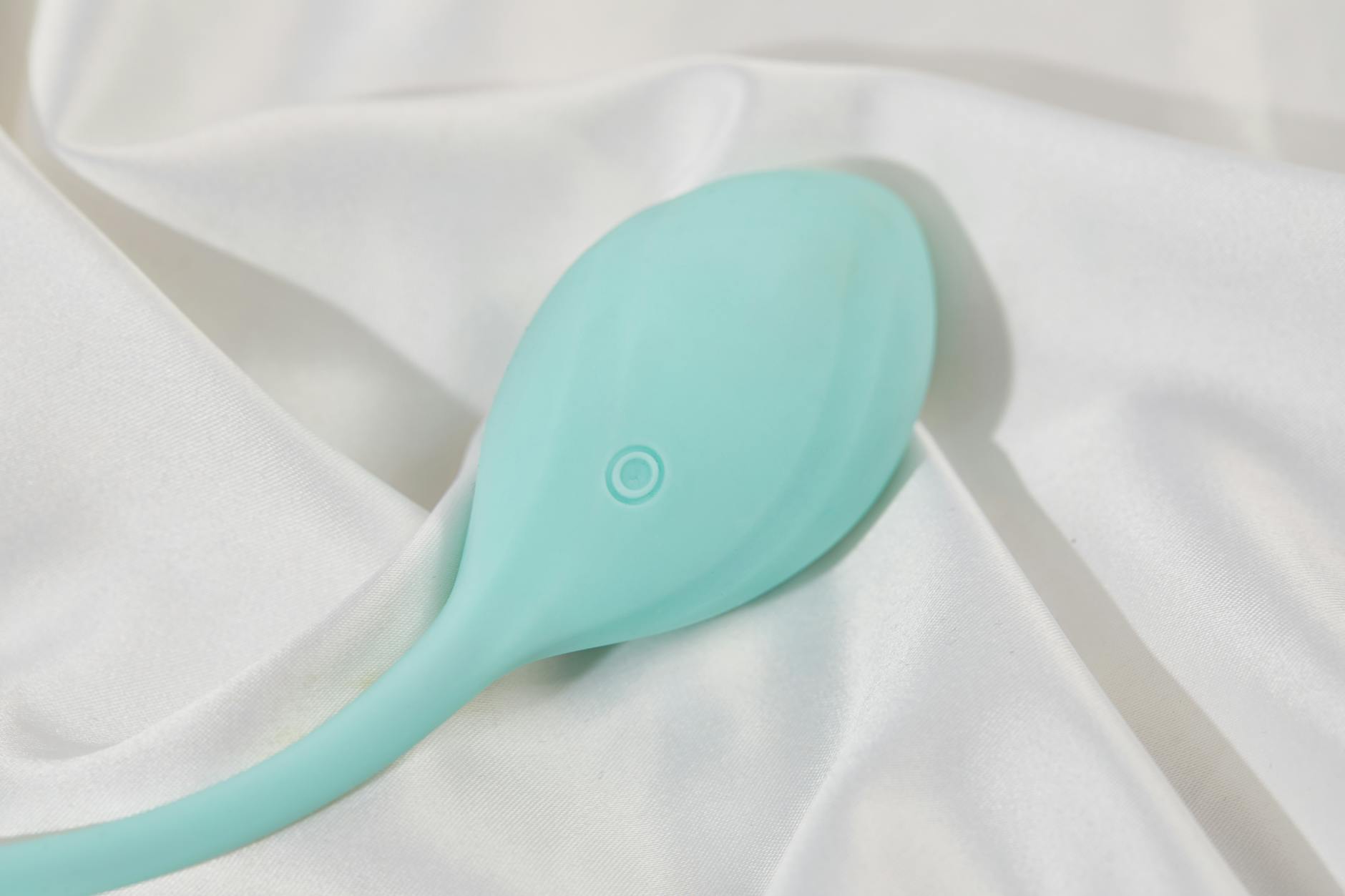
Most couples don't struggle with sex because they don't want it. They struggle because saying "I want that" out loud feels like handing someone a loaded weapon and hoping they don't use it against you. So you stay quiet. Your partner stays quiet. And the whole thing stays in the dark where it gets smaller and meaner with every year that passes.
Here's what I've seen in my practice: introducing a lemon vibrator is rarely about the toy itself. It's about creating a permission structure for a conversation that was too scary to have before.
There are three reasons most of us don't talk about sex with our partners, and none of them are actually about being shy.
First, vulnerability feels one-directional. If I tell you what I want and you say no, I've just announced that my desires matter less than your comfort. That's not a small risk. So instead, we say nothing and call it politeness.
Second, we've been taught to interpret requests as criticism. When you say "I'd like to try a lemon vibrator," your partner might hear "you're not enough." That's not fair, but it's automatic. Twenty years of cultural messaging about female pleasure being selfish or male partners feeling threatened by toys has trained us to hear requests as rejections.
Third, we're scared of being wrong. What if you introduce this and your partner feels pressured? What if it becomes a thing you're "supposed" to do? What if the whole experiment fails and now there's this weird sad memory attached to something that should feel good?
All of that is reasonable. And it's also exactly why a lemon vibrator can actually help.
This is the thing nobody tells you: a toy is not a threat to your partner. It's an artifact. It's a third object in the room, and that changes the geometry of the conversation entirely.
Instead of sitting across from each other with your wants and their resistance, you now have a thing to talk about. "I found this and I'm curious" is a very different sentence than "you're not satisfying me." One of those conversations leads to defensiveness. The other leads to curiosity.
I had a client, Marcus, who couldn't bring himself to tell his wife he wanted her to have more pleasure during sex. He felt like saying it would imply he wasn't satisfied, which wasn't true at all. He was terrified of hurting her feelings. Six months of silence later, his wife was convinced he wasn't attracted to her anymore.
Then he bought a lemon vibrator. Not secretly, just casually. "I saw this and thought it looked interesting. Want to check it out together?" That sentence opened a door that had been locked for years.
Timing matters. Don't do this during sex, right before sex, or when either of you is stressed, tired, or in a hurry. Pick a moment that feels neutral. A Sunday afternoon. Before bed when you're both relaxed. Basically, any moment that doesn't have performance pressure baked into it.
Show it the way you'd show a interesting piece of design you found. "I came across this and it's kind of clever. The sensation is different from regular vibrators." You're not saying "we should use this." You're saying "this exists and I'm comfortable with it existing." That's the difference between an invitation and an agenda.
Let your partner hold it, play with the buttons, get familiar with it without any expectation attached. Some people need five minutes with a toy before they can talk about it. Some need a week of just knowing it's in the drawer.
Once the lemon vibrator exists in your shared space as a neutral object, you can use it as a bridge to deeper conversation.
Try this: "I've been thinking about what makes sex feel good for me, and I'd like to try this. Not because anything's wrong. Because I think I could feel more."
That sentence does three things. It centers your own pleasure, which signals to your partner that this isn't about them failing. It's honest about the wanting. And it acknowledges that this is an expansion, not a replacement.
Your partner might say yes immediately. They might need time. They might have concerns. "Does this mean you don't want me to touch you?" "Are you asking me to do something I'm not comfortable with?" Those are fair questions and they deserve real answers.
Be specific: "I want us to use this together sometimes. When it feels right. I still want you. This is just another way I want to feel pleasure." That's the actual conversation. Not romantic, but true.
Listen to the actual objection, not the story you told yourself about why they're saying no.
If your partner is worried the lemon vibrator means they're not enough, that's a conversation about insecurity, not toys. You can't buy your way out of that with a better vibrator. You have to say, out loud, "You are enough. I want more sensation sometimes. That's about my body, not about you."
If your partner is genuinely uncomfortable with toys, that's a boundary and it deserves respect. But there's a difference between "I'm not ready" and "never." Sometimes people need time. Sometimes they need to hear from other people that toys are normal. Sometimes they need to feel like the decision is theirs, not something they're being convinced into.
I've watched couples get stuck for years because one person said no once and the other person decided that was permanent. It rarely is. More often it's "not right now" or "I don't understand it yet" or "I'm scared of what it means."
Once you've had the conversation and you're both on board, the clitoral vibrator becomes something you navigate together. This is where a lot of couples drop the ball. They introduce the toy and then don't actually talk about how it felt.
Afterward, ask real questions: "Did that feel good?" "Was there too much sensation?" "Do you want to try it again?" "What would make this better for you?"
Notice I'm not asking "did you come?" Pleasure isn't only about orgasm. Sometimes the best part of using a lemon vibrator with a partner is just trying something new together and feeling like you're on the same team.
Here's what I tell couples: the lemon vibrator is the first domino. Once you've introduced it and it's gone okay, you've cracked open a door to talking about pleasure more generally.
The toy created the permission. Now you get to use that permission for bigger conversations.
Some couples find that once they've talked about this openly, they realize they've been unhappy about other things too. They need to renegotiate their whole relationship. That's real and it's important. Other couples find that this one conversation changes everything because they finally feel seen by their partner.
Fear: "They'll think I'm not satisfied with them."
Maybe your partner will think that at first. That's exactly why you need to say it clearly and more than once if needed: "I love sex with you. This is about expanding what feels good, not replacing you." Partners who care about you want you to feel good. Give them the chance to be that person.
Fear: "It will become a required part of sex."
It won't unless you treat it that way. You get to use a lemon vibrator sometimes and skip it other times. Sex is flexible. It's allowed to evolve based on what you both want that day.
Fear: "We'll try it and it'll be awkward."
Yes, possibly. Sex with a new element is often a little awkward at first. That awkwardness usually fades by the second or third time. And honestly, laughing at the awkwardness together is sometimes the best part. It lowers the stakes and reminds you that pleasure doesn't have to be serious to be real.
If you've tried to have this conversation and it's become a bigger conflict, you might benefit from a couples therapist or a sex-positive counselor. This isn't a failure. It's a sign that the communication breakdown is about something deeper than the toy.
I often see couples where one person wants to explore and the other is shut down. Usually there's a reason for that shutdown that has nothing to do with lemon vibrators. Maybe there's resentment about something else. Maybe there's been infidelity. Maybe one person feels unseen in the relationship for reasons that go way beyond the bedroom.
A professional can help you untangle that. And that's worth it.
Let's be real: having a conversation with your partner about what you want sexually is terrifying. It's vulnerable. It requires trust and it requires courage.
But here's what I've seen happen over and over: couples who can talk about lemon vibrators and pleasure end up being couples who can talk about other hard things too. Money. Family. Disappointment. Dreams. The stuff that actually holds relationships together.
The toy is just the entry point. The real gift is learning that your partner can handle knowing what you want. And that you're allowed to want things.
If this feels impossible right now, that's information too. That might mean you need support from someone trained in this. Or it might mean you need to do some work on your own to figure out why asking for pleasure feels so dangerous.
But the lemon vibrator will be there when you're ready. And so will the conversation.
That's a boundary they're setting, and it's worth understanding before you accept it. Ask them: "What are you worried about? What would make this feel safer for you?" Sometimes it's about feeling excluded. Sometimes it's about different values around sex. Sometimes it's about old conditioning. Once you know the actual concern, you can address it together. You might find middle ground. Or you might find that this is a fundamental incompatibility. Either way, you'll know.
Absolutely. In fact, less experience sometimes makes the conversation easier because you're both still figuring things out. There's less history of "this is how we do things" to push against. You're building new patterns together, and that's actually an advantage. Start slow, communicate about what feels good, and remember that less experienced partners are often more curious, not less.
Watch their behavior, not just their words. If they seem genuinely engaged and curious afterward, that's different from someone who goes through the motions and then distances themselves. If you're worried, ask directly: "You seemed a little quiet after. Is everything okay?" You're looking for honesty, not reassurance. Sometimes it takes a few conversations for your partner to really feel safe saying no.
That's actually valuable information. It might mean you need to slow down and talk more before trying again. Or it might mean this particular approach isn't working for you two and you need a different strategy. Couples therapy can help you figure out what actually happened and whether this is a toy problem or a communication problem. Usually it's the communication.
I've seen both work. New relationships have the advantage of building patterns together. Established relationships have the advantage of trust and safety. What matters more is that both people are genuinely interested. A lemon vibrator introduced out of obligation will feel like pressure. One introduced because you're both curious will feel like exploration. The timing is less important than the willingness.
Honor that hesitation. Ask yourself why. Are you worried about your own pleasure or arousal? Are you uncomfortable with toys? Are you worried about what it means about you or your relationship? Your hesitation is valid data. Share it: "I'm interested but I'm also nervous about X." Work with your partner to make it feel safe. And know that you get to say no or "not yet" without having to defend it.
Talking about pleasure with your partner is not a small thing. It's an act of vulnerability and trust. Whether you use a lemon vibrator as the bridge to that conversation or you find another way, the real win is saying what you actually want and knowing you'll be met with curiosity instead of judgment.
If you're still struggling with how to have this conversation or if you're in a relationship where communication about any topic feels unsafe, reach out. That's exactly what we're here for. You deserve to feel heard.