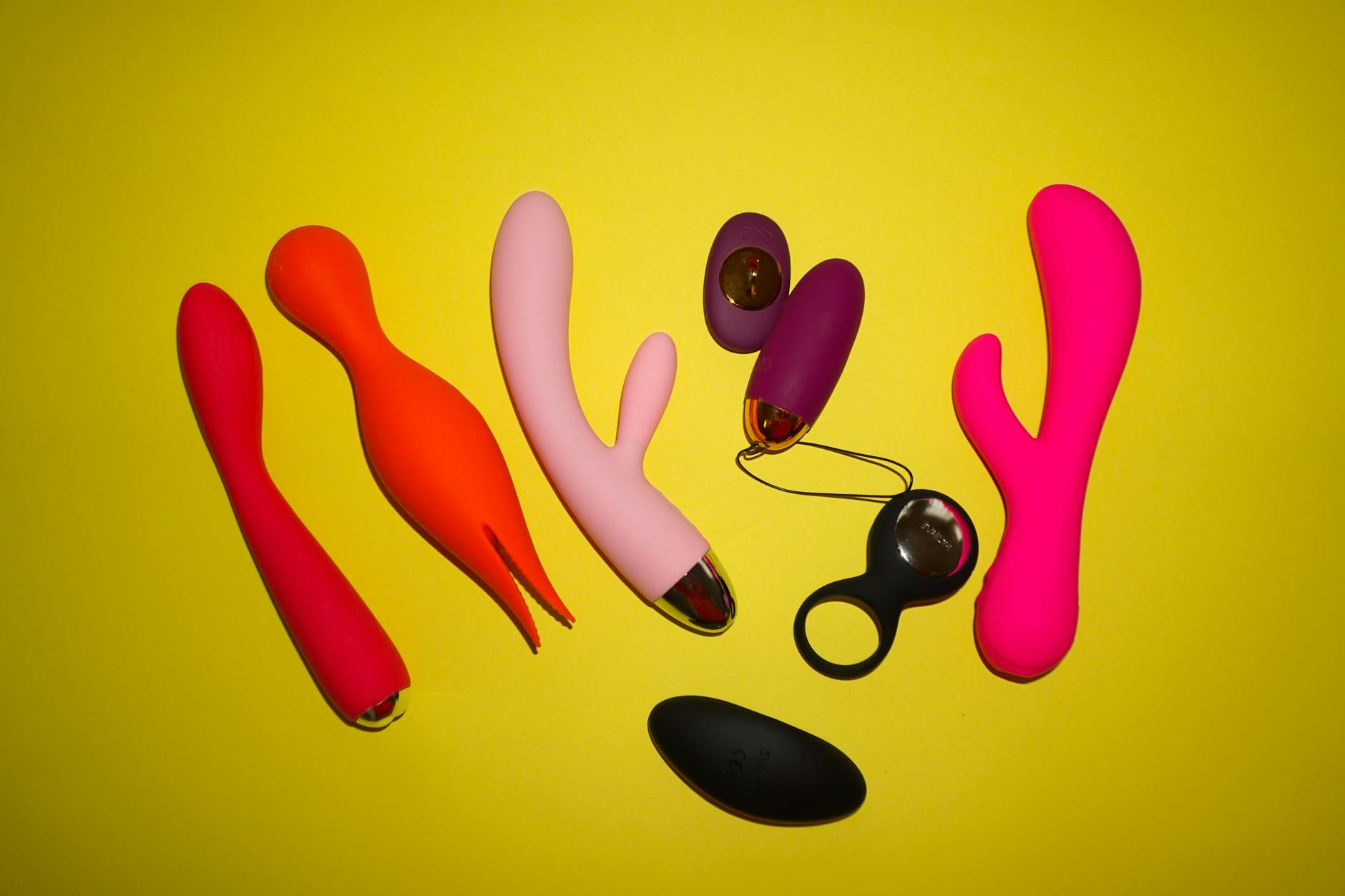
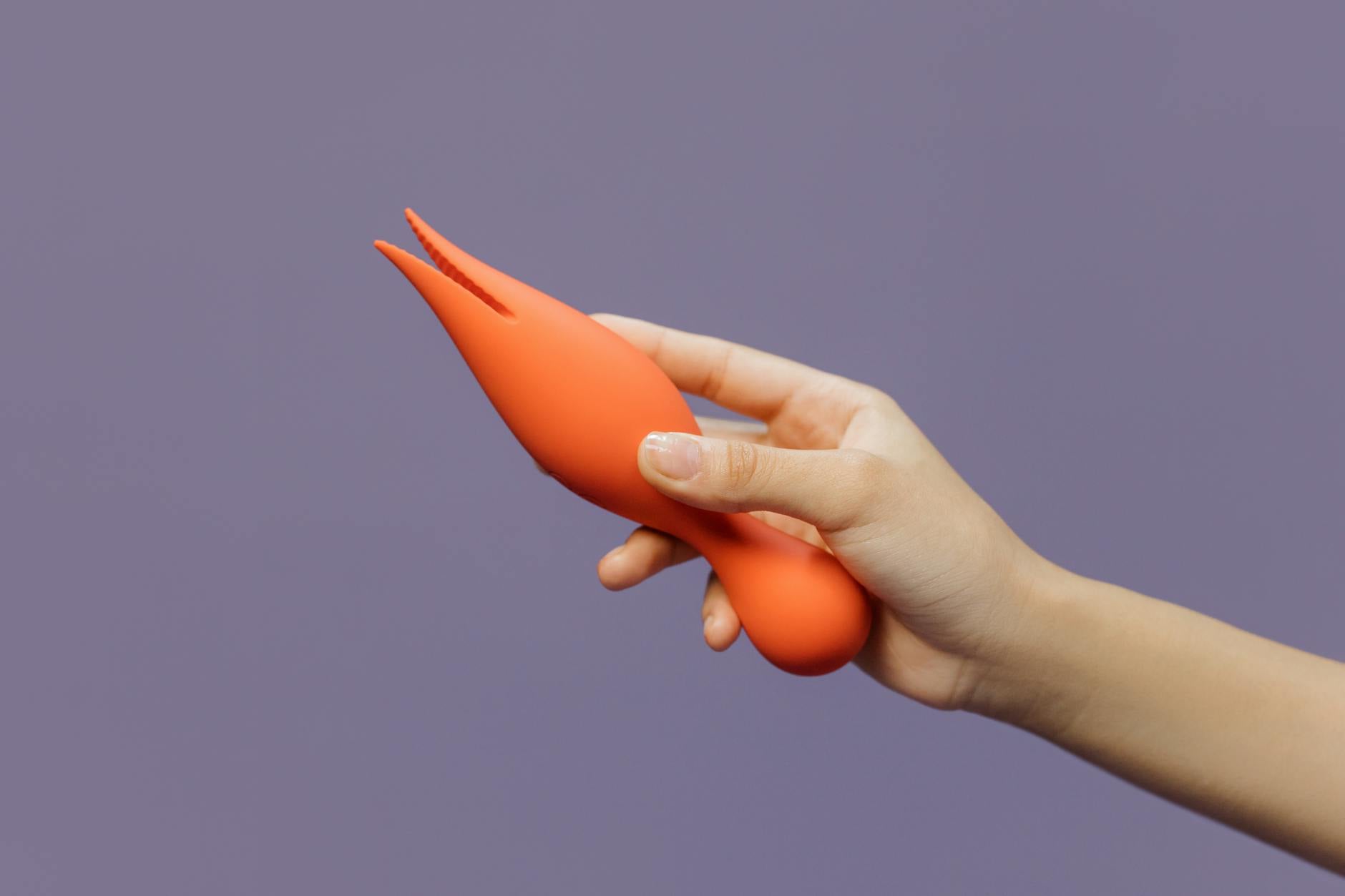
You want to try a lemon vibrator. You also have a voice in your head saying something like: "What if it doesn't feel good?" or "What if I can't orgasm with it?" or "What if my body's just broken?" That voice isn't weakness. It's anxiety, and it's wildly common. The tricky part is that anxiety itself becomes a blocker. Your nervous system tightens up, and then nothing works the way you want it to.
Here's what I know from years of working with people in your exact spot. Pleasure isn't a performance. It's a conversation with your body. And that conversation gets a lot quieter when you're being graded.
When you're anxious, your body activates its threat response. Your nervous system narrows focus to "stay safe," which means blood flow redirects away from pleasure centers and toward large muscle groups. Your pelvic floor tightens. Your mind stays in your head instead of dropping into sensation. Nothing is wrong with you. Your body is doing exactly what it's designed to do.
The problem isn't the lemon vibrator. The problem is the pressure.
Most people approach their first time with a clitoral vibrator like they're taking a test. Will it work? Will I orgasm? Will I prove something about myself? That framing guarantees you'll stay tight and in your head. A lemon sucker or any other vibrator works best when you're curious instead of evaluating.
Before you even touch a lemon vibrator, change one thing: give yourself permission for this to feel like nothing at first. Say it out loud if you need to. "It's okay if this feels weird." "It's okay if I laugh." "It's okay if I turn it off after thirty seconds."
I'm not being cute. This permission statement actually rewires your approach. Instead of showing up to prove something works on your body, you're showing up to explore. Exploration has zero failure points. A test has two outcomes: pass or fail. Exploration has only one outcome: information.
When you're anxious, that difference is everything.
Your first session with a lemon vibrator should have nothing to do with orgasm. I know that sounds backwards. But your brain has already linked vibrators to "will this work?" which is pressure. Break that association.
Instead, schedule a time when you have at least an hour alone. Not rushed. Not squeezed between other things. Put your phone in another room. Tell your partner or housemates you need quiet time (you don't have to explain what you're doing).
Run a bath or get into bed. No vibrator yet. Spend ten minutes just touching your body. Your neck, your arms, your thighs. No goal. Just temperature, texture, sensation. This is where you're training your nervous system to drop out of evaluation mode and into feeling mode.
Now take out the lemon vibrator. Don't turn it on yet. Just hold it. Notice the weight, the shape, the temperature. Does it feel cold? Does it feel smooth? You're building familiarity so your nervous system stops treating it like a foreign object.
Then touch it gently to the inside of your arm or your thigh. Still off. Just texture. This is called desensitization, and it tells your threat response system, "Hey, this thing is safe. We've seen it now."
Only then turn it on to the lowest setting. Not on your body yet. Just listen. What does it sound like? Some lemon vibrators are quiet, others have more of a hum. There's no right answer, but knowing what to expect means your body won't jump when you feel it.
Start on a body part that feels low-stakes. Your inner arm. Your collarbone. Your lower belly. Not your clitoris. When you skip straight to the most sensitive area, you're putting all the pressure there. Your body braces for intensity, and intensity plus anxiety equals shutdown.
Keep it on the lowest setting. Move it slowly. Spend a minute or two on each spot. You're doing two things: learning what the sensation feels like, and giving your nervous system time to adjust. If you feel weird or uncomfortable, stop. That's not failure. That's data.
Most people with anxiety rush through this part because the novelty feels awkward. Don't. The awkwardness is the whole point. You're boring your nervous system until it relaxes.
After several sessions of low-pressure exploration, you might want to try your lemon vibrator closer to your clitoris. Use lubrication. This matters way more than you probably think. Water-based lube reduces friction, which means fewer nerve endings feel overwhelmed at once. It also signals to your body, "Okay, we're taking this seriously and being gentle." That shift in your nervous system is half the battle.
Start on the lowest pattern. Don't go to your clitoris directly. Put it on your outer labia or your mons pubis first. Broader strokes. Less concentrated sensation. Let arousal build naturally instead of forcing intensity straight to the most sensitive spot.
If you start feeling anxious thoughts bubble up, don't push them away. That creates more tension. Just notice them. "That's the anxiety talking." Then bring your attention back to physical sensation. "What does the vibration feel like right now? Is it warm where I'm touching?" This is called grounding, and it's the opposite of performance pressure.
One thing that shifts everything for anxious people. Give yourself permission to stop anytime, for any reason, with no explanation owed to anyone. Not even yourself.
You don't need a reason. "This doesn't feel good right now" is enough. "I changed my mind" is enough. "I want to do something else" is enough. When you know you have a true exit, your nervous system relaxes. It knows you're not trapped into proving something.
Most anxious people have spent years pushing through discomfort to please others. This is your chance to practice the opposite. Pleasure happens when your nervous system trusts that your comfort matters more than the outcome.
"I feel like I'm doing something wrong." You're not. There's no correct way to use a vibrator. It's not homework with a rubric. Your curiosity is the only guide.
"I keep thinking about whether it's working." That's the evaluation mind again. Try this: don't ask "Is this working?" Instead, ask "What am I noticing right now?" It sounds like a small shift, but it moves you from judgment to observation.
"It feels weird or tingly in a bad way." Lower the intensity. Most anxious people jump straight to pattern 5 because they want proof it's doing something. Pattern 1 or 2 will give you plenty of information. You can always go higher later.
If you've given yourself time, permission, and low-pressure exploration, and pleasure still feels locked away, that's not a vibrator problem. It might be trauma, relationship anxiety, medication effects, or deeper nervous system dysregulation. That's when talking to a therapist trained in somatic work becomes valuable. A clitoral vibrator can't fix what's happening in your nervous system. But a good professional can help you reset it.
You're not here to prove a lemon vibrator works on your body. You're here to learn what your body likes when there's zero pressure. That information is gold. Because once you know what feels good without an audience, without a timer, without stakes, you've solved half the equation for everything else.
Your body isn't broken. Your nervous system is just protecting you. And protection loosens when you prove it's safe to relax.
Yes. When your nervous system is in threat mode, blood flow redirects away from pleasure centers. Your pelvic floor tightens. Sensation dulls. This isn't about the vibrator being faulty. It's about your body prioritizing safety over sensation. The fix is removing pressure, not getting a stronger toy.
There's no standard timeline. Some people relax into it in two or three sessions. Others need four to six weeks. The timeline matters less than the consistency. Show up without expectations, and your nervous system will gradually learn it's safe. Rushing that process usually backfires.
If you have a supportive partner, yes. The script is simple: "I want to explore this, but I'm a bit nervous. I'd like to do some solo exploration first so I can figure out what I like without pressure." That frames it as self-knowledge, not rejection. Most partners respect that.
Try using it over underwear or through a thin layer of fabric. This dulls the sensation without removing it. You're still getting information about how your body responds, just at a lower volume. Once your nervous system relaxes, you can remove the barrier.
Completely normal. You're doing something new, alone, possibly for the first time. Self-consciousness is just unfamiliarity. It fades with repetition. The more you practice without judgment, the more natural it becomes. By session five or six, it feels less novel and more routine.
Yes, but slowly and with permission at every step. A clitoral vibrator can actually be a powerful tool for reclaiming sensation and pleasure after trauma, but only if you're moving at your own pace and not pushing yourself. Working with a trauma-informed therapist alongside exploring pleasure tools makes a huge difference.
Pleasure with anxiety is possible. It just requires a different approach. Less pressure. More curiosity. More permission. More time. That's not weakness. That's wisdom.